Aging skin refers to the skin changes that appear with the natural passage of time. Understanding the characteristics and treatment methods of aging skin lets you effectively manage skin health. This article explains in detail the main characteristics of aging skin, its causes, and various clinically proven treatment methods.
Aging skin does not simply mean wrinkles. Complex changes such as loss of elasticity, dryness, rough texture, pigmentation, and sagging progress simultaneously. This is because the skin's regenerative capacity decreases with age, and the production of key proteins such as collagen and elastin declines. With proper understanding and care, you can slow the pace of aging and improve your current skin condition.
Main Characteristics of Aging Skin
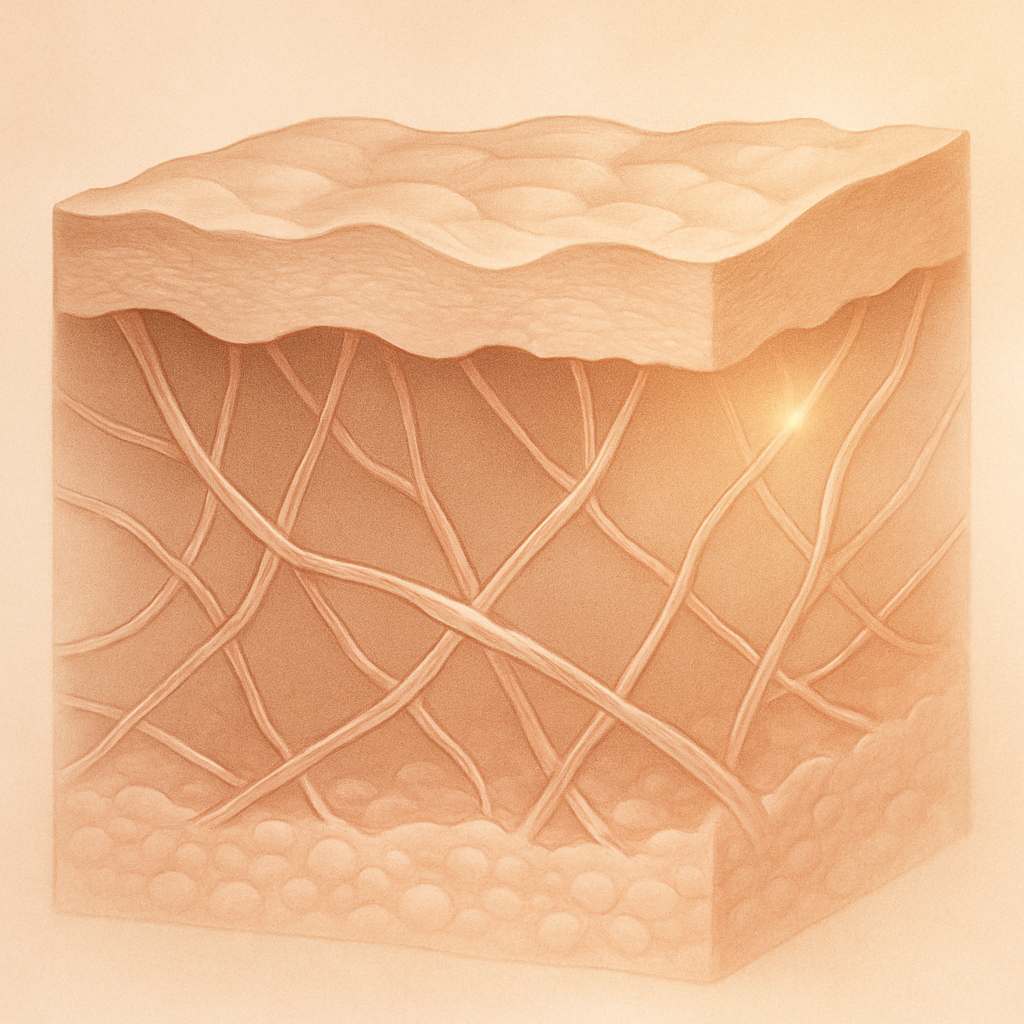
Aging skin appears through several noticeable changes. Wrinkles are divided into expression lines and deep wrinkles, and are especially prominent on the forehead, around the eyes, the nasolabial folds, and around the mouth. Loss of skin elasticity, caused by decreased collagen and elastin, leads to sagging and stretching of the skin. As dryness worsens, cracks and scaling form on the surface, and the skin texture becomes rough. Pigmentation is characterized by an increase in melasma, age spots, and freckles due to cumulative UV damage.
Types and Causes of Wrinkles
Wrinkles are classified by their formation mechanism into expression lines and gravitational wrinkles. Expression lines are dynamic wrinkles that form mainly on the forehead and around the eyes due to repeated muscle contraction. These wrinkles remain as marks on the skin even when the face is not moving. Gravitational wrinkles are static wrinkles that form as the skin sags and loses elasticity over time. It is known that the collagen content of the dermis decreases by about 1% per year with increasing age.
Loss of Elasticity and Sagging
Skin elasticity is maintained by the proteins collagen and elastin in the dermis. Increasing age, UV exposure, smoking, and oxidative stress destroy these proteins, reducing elasticity. Loss of elasticity causes the skin to sag, blurring the facial contour and dulling the jawline in particular. These changes represent structural collapse of the skin and are difficult to improve with topical products alone.
Dryness and Rough Skin Texture
With age, sebaceous gland activity decreases and the skin's moisture retention capacity declines. This causes dry skin, and as the epidermis thins, the skin barrier function weakens. Cracks and scaling form on the dry skin surface, and the skin becomes rough overall. In addition, as skin regeneration capacity decreases, keratin is not shed normally, worsening the rough texture.
Physiological Mechanisms of Aging Skin
Skin aging results from a combination of extrinsic and intrinsic factors. UV damages the skin's DNA and generates free radicals that promote collagen breakdown. As the skin's regenerative capacity declines at the cellular level, repair of damaged cells slows. Hormonal changes, particularly a decline in estrogen, lead to decreased collagen production and increased skin moisture loss. Reduced energy production due to declining mitochondrial function also weakens the skin's resilience.
Decline in Collagen and Elastin
Collagen is a protein that makes up about 70% of the skin's dry weight and is responsible for structural support and elasticity. With increasing age, collagen production slows relative to breakdown, resulting in a net decrease. UV exposure activates enzymes called matrix metalloproteinases (MMPs), which break down existing collagen as well. Elastin likewise degrades over time and loses its elasticity. This protein loss deepens wrinkles and causes the skin to sag.
Free Radicals and Oxidative Stress
UV, air pollution, and smoking generate free radicals in the skin. Free radicals damage cell membranes, proteins, and DNA, overwhelming the antioxidant defense system and increasing oxidative stress. Oxidative stress activates inflammatory signals, accelerating collagen breakdown. It also excessively stimulates melanin production, causing pigmentation. As this process accumulates, skin aging accelerates.
Clinical Treatment Methods for Aging Skin
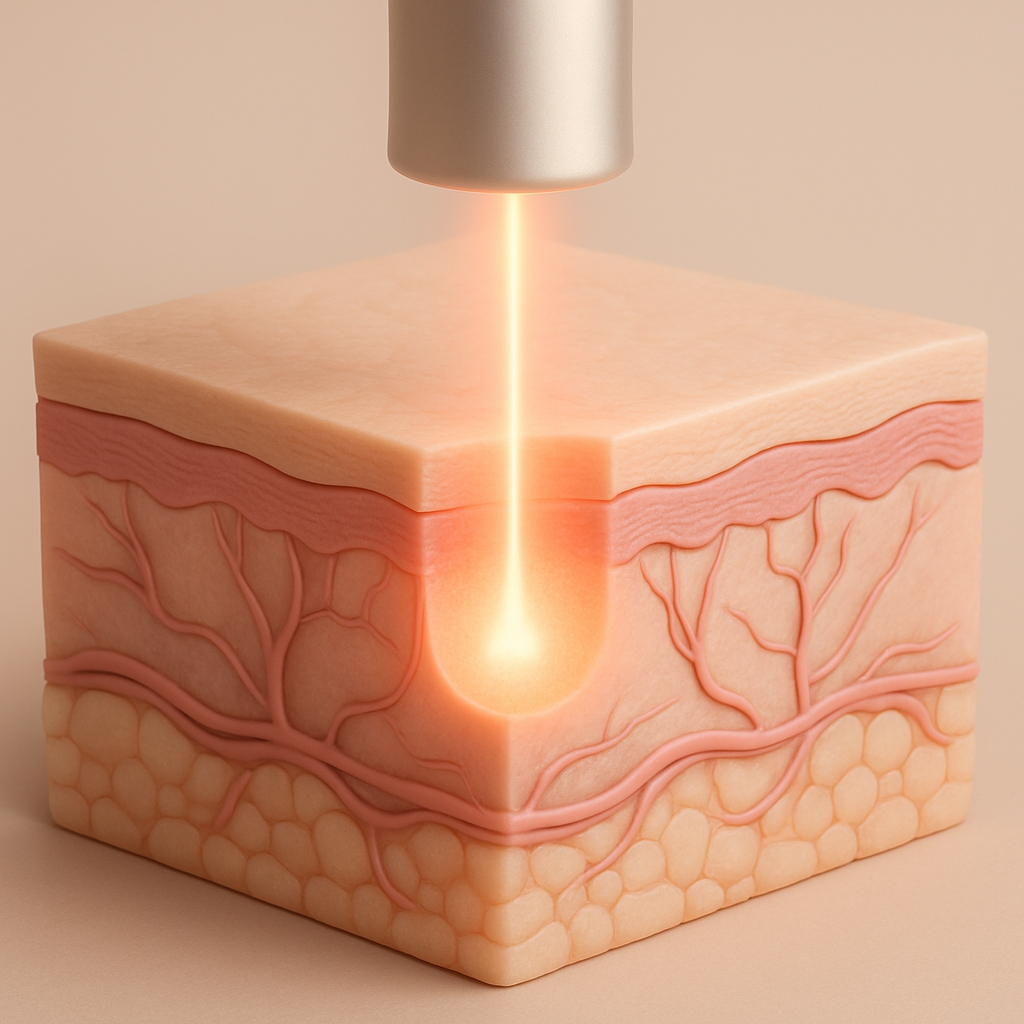
Aging skin treatment combines various methods according to the type and degree of symptoms. Options range from non-invasive to invasive methods, and it is important to establish a customized treatment plan tailored to the individual's skin condition, age, and lifestyle. Clinically proven treatment methods work on the principle of stimulating skin regeneration or replenishing lacking components.
Laser and Light Energy Treatment
Laser treatment is a method that uses light energy of a specific wavelength to stimulate skin regeneration. The Fraxel laser irradiates fine laser beams in a grid pattern to create micro-damage in the epidermis and upper dermis. The natural healing response to this damage activates collagen regeneration. Laser toning irradiates a low-energy laser multiple times to improve skin color and wrinkles non-ablatively. Picosecond ultra-short-pulse lasers such as PicoSure and PicoWay break up pigment lesions while also inducing collagen production. After such laser treatments, downtime with redness and swelling may occur, recovering after three to seven days.
Radiofrequency and Microneedle Treatment
Thermage delivers radiofrequency energy to the skin to thermally contract dermal collagen and stimulate regeneration. Because it directly stimulates the dermis without epidermal damage, downtime is almost nonexistent. InMode delivers radiofrequency energy to the dermis through microneedles, affecting deeper layers. Microneedling creates tiny perforations in the skin with thousands of fine needles to activate fibroblasts. In this process, growth factors are secreted and collagen regeneration is promoted. After microneedling, the skin may be red for about 48 hours, but recovery is relatively fast.
Injection Treatment and Fillers
Hyaluronic acid fillers directly fill wrinkles and sagging caused by volume loss. Injected into the dermis, they expand the skin and simultaneously absorb moisture for a hydrating effect. Collagen fillers or autologous fat grafting are used on a similar principle. Rejuran is an ingredient extracted from salmon DNA — a biological signaling substance that stimulates skin regeneration. After injection, the skin's radiance and elasticity improve, and results may vary by individual. In general, fillers last 6–18 months and are gradually absorbed by the body.
Botox and Botulinum Toxin Treatment
Botox (botulinum toxin) blocks the release of acetylcholine at the neuromuscular junction to inhibit muscle contraction. It is especially effective at improving expression lines on the forehead, glabella, and around the eyes. As muscle contraction decreases, dynamic wrinkles are softened, and it also prevents the formation of new wrinkles from repeated muscle contraction. The effect begins to appear three to seven days after injection and reaches its maximum after two weeks. The duration is generally three to four months, varying by individual. Using an appropriate dose can avoid unnatural expressions.
Chemical Peels and Exfoliation
This method deliberately removes the epidermis by applying chemical ingredients such as glycolic acid and salicylic acid to the skin. Epidermal exfoliation removes only the epidermis, improving rough skin texture and stimulating skin regeneration. By depth, it is divided into superficial, medium-depth, and deep peels, each with a different recovery period and duration of effect. Peeling of the skin may occur for one to two weeks after the procedure. Peeling agents containing antioxidants such as glycine and vitamin C also provide skin protection at the same time.
Comprehensive Aging Skin Care Strategy
Using several methods in combination is more effective than a single treatment. For example, combination treatment is possible in which laser treatment stimulates collagen regeneration, fillers fill the remaining wrinkles, and Botox softens expression lines. It is best to keep treatment intervals at four to six weeks or more, considering the skin's recovery and response. After treatment, use of sunscreen is essential. Using sunscreen of SPF 50 or higher daily can prevent additional damage and maximize treatment effects.
Non-Invasive Daily Care
Beyond laser or injection treatments, care that can be done at home is important. Products containing vitamin C, retinol, and peptides stimulate collagen production and provide antioxidant action. Creams containing ceramides and glycerin strengthen the skin barrier and reduce moisture loss. Panthenol and centella ingredients promote repair of damaged skin. Hyaluronic acid essence supplies moisture and improves skin elasticity. Using these products at night maximizes their effect during the period when skin regeneration is most active.
Lifestyle Improvements
UV protection is the most important factor in preventing skin aging. Reapplying sunscreen repeatedly throughout the day is effective. Adequate sleep promotes the secretion of melatonin and growth hormone, the skin regeneration hormones. Smoking accelerates collagen breakdown and should be avoided. An antioxidant-rich diet (fruits and vegetables containing beta-carotene and vitamins C and E) slows the pace of skin aging. Adequate hydration helps supply moisture to the skin, and exercise improves blood circulation, delivering oxygen and nutrients to the skin.
Regular Professional Consultation
Aging skin care is a continuous process, not a one-time event. You should regularly evaluate changes in skin condition through professional consultation and adjust the treatment plan as needed. The optimal treatment combination differs by each individual's skin type, age, lifestyle, and goals. A specialist guides you to achieve maximum effect while minimizing the risk of side effects.
Recovery and Precautions After Aging Skin Treatment
Most procedures require a certain period of recovery time (downtime). After invasive procedures, the skin may become red, swollen, itchy, or stinging. These symptoms are the skin's normal healing response, and their duration differs by an individual's skin sensitivity and the intensity of the procedure. During recovery, do not wash your face with hot water and avoid using irritating products. Antibiotic ointment and panthenol cream help skin recovery and reduce inflammation. When going out, sunscreen must be used to prevent pigmentation.
Care by Recovery Stage
The 24 hours immediately after the procedure is when the skin is most sensitive. During this period, use cold compresses to relieve swelling and minimize the use of irritating products. After two to three days, skin regeneration begins and a crust (scab) may form. Forcibly removing this crust increases the risk of infection, so protect it until it falls off naturally. From one week onward, you can resume daily activities, but avoid exercise or saunas until the skin has fully recovered. Full recovery takes one to four weeks depending on the depth of the procedure.
Long-Term Side Effects and Prevention
Most aging skin treatments are safe, but rarely, complications such as hyperpigmentation, hypopigmentation, scarring, and infection can occur. Because the main cause of pigmentation is UV exposure after the procedure, prevent it by using sunscreen of SPF 50 or higher daily. People with darker skin tones have a higher risk of pigmentation, so the procedure intensity should be adjusted. To prevent infection, use the antibiotic ointment prescribed after the procedure exactly as directed and keep the skin clean. If abnormal symptoms appear, consult a specialist immediately.
Criteria for Choosing Individualized Treatment
When choosing aging skin treatment, you should comprehensively consider your current skin condition, main concerns, availability of recovery time, and budget. If wrinkles are the main concern, a combination of Botox and fillers is effective; if you want to improve skin texture and overall tone, laser treatment is good. If you want to minimize downtime, you can choose Thermage or low-energy laser toning. If you want broad improvement, combining the Fraxel laser and radiofrequency treatment is good. Because results may vary by individual, it is important to set realistic expectations through thorough consultation with a specialist.
Treatment Strategies by Age Group
In the preventive stage of the early 40s, you can start with UV protection, antioxidant use, and light peels or laser toning. In the mid-to-late 40s, when expression lines become clear, a combination of Botox and fillers is effective. In the 50s and beyond, skin sagging is prominent, so combination treatment including radiofrequency or high-intensity laser treatment is needed. Because preventing additional skin damage is most important at every age, you should continue using sunscreen and antioxidant care throughout your life.
Q. What is the difference between aging skin and dry skin?
Aging skin and dry skin are separate concepts. Dry skin refers to a skin type caused by insufficient sebum secretion and can occur at any age. Aging skin, on the other hand, is a physiological change over time, showing characteristics such as collagen loss, reduced elasticity, and wrinkle formation. However, because sebum secretion decreases with age, aging skin also tends to become dry at the same time. Managing aging skin requires more than simple moisturizing — treatment that stimulates collagen regeneration is needed.
Q. At what age is it best to start treating aging skin?
From a preventive perspective, it is effective to start treating aging skin very early. UV protection and antioxidant use are best started in one's 20s to 30s. Specific procedures depend on individual skin condition, but in general you can begin light peels or laser toning from the age of 35–40, when early wrinkles appear. From the mid-to-late 40s, when expression lines become clear, Botox and filler treatments are effective. The earlier you start, the more you can reduce the need for invasive procedures.
Q. When can I go out after aging skin treatment?
The time you can go out depends on the type of treatment. With Botox and fillers you can go out immediately, but you must be careful not to touch the area for 24 hours. After laser toning or low-energy treatments, you can go out one to two days later. Fraxel laser or high-intensity procedures require three to seven days of downtime, so it is best to minimize outings during this period until the skin fully recovers. Whenever you go out, use sunscreen of SPF 50 or higher to prevent pigmentation.
Q. What skincare products can be used alongside aging skin treatment?
During the acute recovery period (one week) after treatment, avoid irritating products and use only a gentle cleanser and moisturizing cream. After recovery, products that stimulate collagen production, such as vitamin C essence, retinol cream, and peptide-containing essence, are effective. Creams containing ceramides and glycerin strengthen the skin barrier. Panthenol essence promotes recovery. Use sunscreen of SPF 50 or higher every morning and evening to prevent additional damage. Choose products according to your individual skin sensitivity, and rather than adding several products at once, introduce them one at a time at one- to two-week intervals.
Q. How long do the effects of aging skin treatment last?
The duration of effect differs by treatment. Botox lasts three to four months, and fillers last about 6–18 months (depending on the type). Laser treatment shows results in a single session, but the skin ages again over time, so maintenance treatments are needed every 6–12 months. Thermage or radiofrequency treatment lasts one to two years from a single session, but individual variation is large. The effect of chemical peels lasts several weeks to several months, so regular repetition is needed. Because all treatment effects can differ by an individual's age, skin condition, and lifestyle, it is important to establish a maintenance plan through regular consultation with a specialist.
Notice under Article 56 of the Medical Service Act: This article is intended to provide medical information about skin aging and does not replace diagnosis or prescription. Results may vary from person to person.