A skin reset is a process that activates the regenerative capacity of damaged or aged skin to replace it with new skin. The goal of a skin reset is to restore the function of the epidermis and dermis damaged by various skin problems such as UV damage, acne, pigmentation, and wrinkles. This article medically explains the physiological principles of a skin reset, the main procedure methods, management through skincare, and the effects that appear during recovery.
Modern skin is continuously exposed to UV, fine dust, and oxidative stress. Due to these external stimuli, keratin abnormally accumulates in the epidermis, collagen and elastin in the dermis are damaged, and melanin becomes unevenly distributed. A skin reset is the process of removing these damaged skin cells and promoting the production of new cells to return the skin to its original healthy state.
Physiological Principles of a Skin Reset

For a skin reset to work effectively, you need to understand the normal turnover cycle of the epidermis. The cell regeneration cycle of healthy skin is about 28 days, but this cycle slows in damaged or aged skin. Normally, new keratinocytes produced in the basal layer of the epidermis rise to the surface over about two weeks, stay on the surface for about two weeks, and then shed. However, when UV damage or inflammation persists, this process becomes irregular.
Each Stage of Epidermal Regeneration
The first stage of a skin reset is exfoliation, which removes the damaged or dead stratum corneum. This is done through physical exfoliation, chemical peels, or lasers. Once the stratum corneum is removed, the skin immediately promotes cell division in the basal layer to create a new stratum corneum. At the same time, the micro-wounds caused by the removed stratum corneum activate the skin's regeneration signals. These signals instruct fibroblasts to produce collagen and elastin.
Dermal Collagen Regeneration
Collagen in the dermis is responsible for the skin's elasticity and structure. When the existing collagen structure is destroyed by UV damage, wrinkles and sagging occur. When micro-wounds are deliberately created during the skin reset process, the skin activates fibroblasts to repair them and produce new collagen. This process proceeds gradually over three to six months, ultimately restoring skin elasticity and improving wrinkles.
Normalization of Melanin Distribution
Pigmentation, melasma, and freckles occur due to the excessive activity of melanocytes that produce melanin. A skin reset improves pigmentation by removing the pigment-containing keratin of the damaged epidermis. In addition, when a new epidermis forms, it creates an environment that helps maintain a normal melanin distribution.
Main Procedure Methods for a Skin Reset
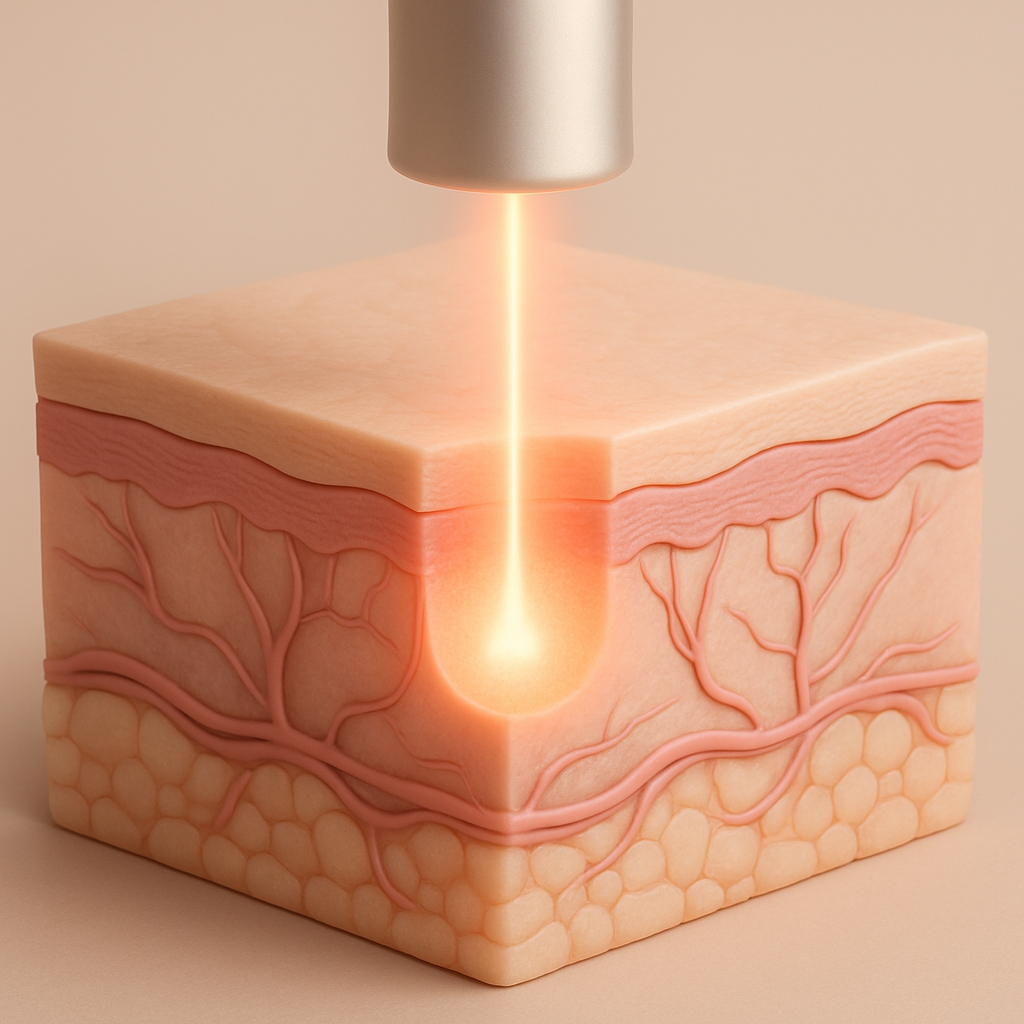
There are several methods for a skin reset, chosen according to the degree of skin damage and the individual's skin type. Each method induces skin regeneration through a different mechanism, and combining them is even more effective. The following are the most widely used skin reset methods in clinical practice.
Laser Toning and Low-Power Laser Treatment
Laser toning is a method of irradiating a low-energy laser multiple times to give fine stimulation to the entire skin. In this process, it removes uneven pigment in the epidermis while stimulating fibroblasts in the dermis to promote collagen production. The advantage of laser toning is that it has almost no downtime. Slight erythema may appear right after the procedure but subsides within a few hours. Performing 4–6 sessions at four-week intervals generally brightens the overall skin tone and improves pigment.
Fraxel Laser and Fractional Laser Treatment
The Fraxel laser is a true non-ablative laser, irradiated in point form to create thermal damage in which undamaged surrounding tissue is mixed with damaged tissue. This method uses 1550nm infrared to stimulate the epidermis and dermis simultaneously. The thermal damage from the Fraxel laser induces powerful collagen regeneration, effectively improving wrinkles, acne scars, and pigmentation. Downtime is 3–7 days, with crust formation and slight swelling possible after the procedure. It is generally performed 3–5 times at three- to four-week intervals.
Chemical Peels
Chemical peeling is a method of applying acid to the skin to chemically remove the stratum corneum and part of the epidermis. Acids of various concentrations, such as glycolic acid, salicylic acid, and trichloroacetic acid (TCA), are used, and the effect differs by the depth and intensity of the peel. Superficial peels (30–70% glycolic acid) have a downtime of 1–3 days and improve pigment and keratin across the epidermis. Medium-depth peels (25–50% TCA) have a stronger effect but require a downtime of 7–10 days. After a chemical peel, the skin becomes very sensitive, so UV protection and moisturizing are very important.
Microneedling and Ultrasound Stimulation
Microneedling is a method of creating micro-holes of about 1 mm in the epidermis and dermis with fine needles. The micro-wounds created this way trigger the skin's natural healing response to promote collagen and elastin production. Microneedling has a short downtime of 1–3 days yet provides good results. Ultrasound stimulation (radiofrequency) is a method of stimulating the epidermis and dermis with thermal energy, inducing epidermal regeneration and collagen contraction at the same time.
Enzyme Peels and Enzymatic Exfoliation
Enzyme peeling is a method of gently removing surface keratin of the epidermis using natural enzymes such as papain or bromelain. It is less irritating than acid peels while providing an exfoliating effect. It is suitable for those with sensitive or inflamed skin and has almost no downtime. After an enzyme peel, the skin becomes brighter and the texture improves.
Skin Reset Skincare Routine and Management
Physical stimulation through the procedure alone makes it difficult to achieve a complete skin reset. A correct home-care skincare routine must accompany it for skin regeneration to proceed as effectively as possible. Skincare for a skin reset should focus on repairing the damaged skin barrier, supporting new cell production, and preventing pigmentation.
Promoting Cell Regeneration with Retinoids
Retinol and retinoids are derivatives of vitamin A, powerful ingredients that regulate the differentiation and proliferation of skin cells. Retinoids stimulate the cells in the basal layer of the epidermis to speed the production of new keratinocytes. If the cell regeneration cycle of normal skin is 28 days, using retinoids accelerates this so the entire skin can be completely renewed once within about 3–4 weeks. It is best to start retinoids at a low concentration (0.025%) and gradually increase it. In the early period as the skin adapts, there may be flaking, dryness, and slight irritation, which is a normal part of the skin adapting. Retinoids must always be used only at night, and sunscreen must be used the next morning.
AHA/BHA Peeling Toners and Serums
Toners or serums containing AHA (alpha-hydroxy acid, glycolic acid) and BHA (beta-hydroxy acid, salicylic acid) provide a gentle chemical peeling effect. These ingredients chemically remove dead keratin from the surface of the epidermis while minimizing irritation. AHA is water-soluble and acts mainly on the epidermal surface, while BHA is oil-soluble and penetrates deep into pores to remove sebum and keratin. Using them 2–3 times a week removes fine keratin and brightens the skin tone.
Antioxidants and Vitamin C Serum
Skin damage from UV begins with the generation of free radicals. Free radicals damage cell membranes and DNA, accelerating skin aging. Vitamin C is a powerful antioxidant that neutralizes free radicals and promotes collagen production. Vitamin C also has an effect of inhibiting melanin production, helping improve pigmentation. Vitamin C serum is best used in the morning, and since it oxidizes over time, it is recommended to use it within three months of opening.
Niacinamide and Peptide Ingredients
Niacinamide (vitamin B3) strengthens skin barrier function and has an anti-inflammatory action. Because the skin can become sensitive during the skin reset process, a toner containing niacinamide helps relieve such irritation. Peptides are ingredients that signal the skin to produce collagen, effective at improving wrinkles and strengthening skin elasticity.
Moisturizing with Ceramides and Glycerin
One of the most important things in the skin reset process is repairing the skin barrier. Ceramides are lipids between the keratinocytes of the epidermis that prevent moisture loss. Because the skin becomes very dry after a chemical peel or laser procedure, using a ceramide-rich cream is essential. Glycerin is a moisturizing ingredient that attracts moisture to the skin to keep it hydrated. A highly moisturizing cream should be used daily until the damaged skin barrier recovers.
Recovery Process and Downtime After a Skin Reset
The effect of a skin reset varies greatly in downtime and recovery period depending on the method used. Low-irritation methods allow an immediate return to daily life, while strong-irritation methods require a recovery period of one to two weeks. Understanding the recovery process lets you prepare for the changes expected after the procedure.
Immediate Response (0–24 Hours After the Procedure)
Right after a skin reset procedure, the skin immediately responds to protect itself. Redness (erythema) appears at the treated area, which is a normal response of the skin's blood vessels dilating to deliver oxygen and nutrients to the damaged area. Slight swelling may also appear, depending on the procedure intensity. With mild laser toning, erythema disappears after 1–2 hours, but with a strong Fraxel laser it can persist for more than 24 hours. Right after the procedure, applying a cold compress to minimize the skin's inflammatory response is good.
Early Recovery Stage (Days 1–7)
During this period, as the skin heals, crust formation (scabs) may appear. Especially after ablative procedures (laser ablation, deep chemical peels), the entire epidermis is damaged, so a brown or black crust forms from days 2–3. You must never peel the crust off by hand and should wait until it sheds naturally. Manually removing it can damage the newly forming epidermis, causing scarring or pigmentation. During this period, apply antibiotic ointment 2–3 times daily to prevent infection. Also, because very strong stimulation was applied, you should intensively use a moisturizing cream and a panthenol-containing essence daily.
Mid Recovery Stage (Weeks 1–2)
After the crust sheds, the newly forming epidermis is exposed. The skin at this stage is very weak and sensitive, so it is best to minimize skincare. Cleanse gently with lukewarm water and avoid hot water or strong friction. The newly formed epidermis does not yet have a normal stratum corneum, so it is very vulnerable to external stimuli. UV protection is essential daily, and it is best to use a physical sunscreen of SPF 50 or higher. Because pigmentation can temporarily worsen at this stage (post-inflammatory hyperpigmentation), active UV protection is the key to preventing pigmentation.
Late Recovery Stage (Weeks 2–4)
As the new epidermis fully forms, the skin regains a normal appearance. From this point, you can resume everyday skincare. However, it is best to still avoid strongly irritating products (high-concentration retinoids, strong peeling toners). From two weeks after recovery, you can slowly reintroduce a gentle peeling toner or low-concentration retinoid. Because collagen regeneration proceeds gradually over a long period (four weeks or more), consistently using retinoids or vitamin C serum during this period can maximize the final effect.
Long-Term Effects (Weeks 4 to 3 Months)
The true effect of a skin reset appears over a long period. Epidermal regeneration is completed within 1–2 weeks, but collagen regeneration in the dermis proceeds over 3–6 months. Therefore, there is no strong sense of improvement right after the procedure, but from four weeks on you can experience the skin gradually becoming brighter, gaining elasticity, and improving wrinkles. To maintain this effect as much as possible, you must combine consistent home care and regular procedures even after the recovery period.
Actual Changes from Skin Reset Effects
Understanding the specific effects you can obtain from a skin reset lets you set correct expectations after the procedure. Because each effect differs by the degree of skin damage, the individual's skin type, and the procedure intensity used, not everyone experiences the same degree of improvement.
Pigmentation and Melasma Improvement
Pigmentation occurs due to melanin accumulation in the epidermis. Because a skin reset removes the pigment-containing keratin of the epidermis, pigmentation is the symptom that improves fastest. With superficial peels, you can feel the skin brightening right after the procedure, and with deep peels the tone becomes markedly even from 2–3 weeks after recovery. However, because deep melasma has pigment deposited even in the dermis, complete improvement is difficult with a single procedure, and repeat sessions may be needed at three- to six-month intervals.
Acne Scar Improvement
Acne scars occur from collagen loss due to acne inflammation. For atrophic acne scars (depressed scars), the cause is a lack of dermal collagen, so the Fraxel laser or deep chemical peels must stimulate the dermis to induce new collagen production. This process takes time, and about 30–50% improvement can generally be expected after 3–4 sessions. The degree of improvement differs by the depth and shape of the scars, and very deep scars are difficult to completely remove. For semi-raised scars (scars raised on both sides), the degree of improvement is better, and they can be improved to an almost imperceptible level over multiple sessions.
Wrinkle and Skin Elasticity Improvement
Wrinkles occur from decreased epidermal moisture and dermal collagen loss. Shallow fine lines improve with just increased epidermal moisture and mild collagen regeneration, so laser toning or gentle peels can be effective. However, deep wrinkles have a significant amount of dermal collagen lost, so multiple Fraxel laser or radiofrequency procedures are needed to improve them. Skin elasticity begins to gradually increase from four weeks after the procedure and shows its maximum improvement after three months.
Pore Size Reduction
Enlarged pores have various causes such as excessive sebum secretion, decreased elasticity, and keratin accumulation. A skin reset removes keratin accumulation and forms a new epidermis to improve elasticity around the pores, so pores appear reduced. In addition, increased skin elasticity from dermal collagen regeneration also contributes to pore reduction. The pore improvement effect does not appear immediately; you can observe pores getting smaller from 2–4 weeks on.
Skin Texture Improvement and Tone Evenness
Uneven skin texture occurs from irregular keratin distribution and pigment imbalance. As a skin reset removes keratin across the epidermis and forms a new, uniform epidermis, the skin texture becomes smooth and the tone even. This effect appears relatively quickly, and you can feel the skin becoming much softer from one week after recovery.
Risk Factors and Side Effects of a Skin Reset
A skin reset is a very safe procedure when performed appropriately, but, like all medical procedures, there is a risk of side effects. Most side effects are temporary and resolve naturally after the recovery period, but permanent complications can occur rarely.
Temporary Side Effects
Erythema (redness) and swelling are the most common side effects and are a normal inflammatory response of the skin. With laser toning they subside within a few hours, but with deep procedures they can persist for 3–7 days. Itching often appears as the epidermis recovers and new keratin forms, mostly disappearing within 7–10 days. Temporary post-inflammatory hyperpigmentation is more likely the higher the procedure intensity and improves within several weeks if UV exposure is minimized.
The Risk of Infection
When external bacteria invade while the epidermis is damaged, infection can occur. Signs of infection include swelling greater than usual, pus discharge, severe pain, and fever. To prevent infection, apply antibiotic ointment daily after the procedure and avoid spicy food, alcohol, and excessive heat exposure. If signs of infection appear, consult a medical professional immediately.
Permanent Pigmentation or Depigmentation
Rarely, pigmentation can persist for several months or more, or conversely the skin can lose pigment and develop white spots (post-inflammatory hypopigmentation). This mainly occurs when skin that received a deep peel is exposed to UV. To prevent this, reapply sunscreen of SPF 50 or higher every two hours daily during recovery.
Scar Formation
Though a very rare side effect, if you forcibly remove the crust after the procedure or an infection occurs, a scar can remain. In those with a keloid tendency, scars can form even during a normal recovery process, so in such cases it is best to avoid deep ablative procedures.
Q. How often should I receive skin reset procedures for optimal results?
A. It depends on the method and intensity. Laser toning is generally done 4–6 times at four-week intervals, the Fraxel laser 3–5 times at three- to four-week intervals, and chemical peels at two- to four-week intervals. After completing the first series, receiving one to two additional maintenance sessions every three to six months keeps the skin in optimal condition. It is important to establish an individualized schedule by consulting a specialist based on your skin condition.
Q. I have sensitive skin — can I receive a skin reset?
A. Yes, it is possible, but caution is needed. Those with sensitive skin should start with less irritating methods. Enzyme peels, low-concentration chemical peels (20–30% glycolic acid), and low-power laser toning are suitable. Before the procedure, you must consult a dermatologist to assess your skin condition and confirm your reaction with a patch test. After the procedure, focus on using soothing products rich in anti-inflammatory ingredients (centella, panthenol).
Q. How important is UV protection after a skin reset?
A. Very important. During recovery, the newly formed epidermis has not fully matured and is very vulnerable to UV. UV exposure raises the risk of pigmentation, inflammation, and scar formation. Therefore, for at least four weeks after the procedure, reapply a physical sunscreen of SPF 50 or higher (zinc oxide, titanium dioxide) every two hours whenever you go out. Thorough UV protection can prevent more than 80% of pigmentation.
Q. Is retinoid use essential in the skin reset process?
A. It is not essential but recommended. Retinoids promote the differentiation of epidermal cells, helping form a normal skin structure and accelerating the production of new skin cells. Using retinoids speeds recovery and, over the long term, more quickly improves skin elasticity and tone. However, because the skin is very sensitive right after the procedure, it is best to slowly introduce a low-concentration retinoid (0.025%) from two weeks after the procedure.
Q. If I have several kinds of skin problems, can a skin reset improve them all?
A. A skin reset can improve a wide range of skin problems but cannot perfectly resolve all of them. Good improvement can be expected for pigmentation, skin texture, fine lines, and pores. However, very deep wrinkles, severe acne scars, and raised scars due to a scarring tendency are not sufficiently addressed by a skin reset alone and may require combination treatment with other procedures (fillers, additional lasers). A personalized treatment plan that comprehensively evaluates your skin problems and skin type is important.
Notice under Article 56 of the Medical Service Act: This article is intended to provide dermatological information and does not replace diagnosis or prescription. Results may vary from person to person.