The recovery period after acne scar treatment varies greatly depending on the depth and type of the scars and the treatment method you choose. Acne scar treatment is not completed with just one or two procedures but is a long-term process requiring continuous care over several months or more. This article organizes, based on scientific evidence, the recovery period after acne scar treatment, the treatment duration by scar type, and precautions during recovery.
Because the recovery period for acne scars varies greatly by their shape, it is important to first identify your own scar type. In addition, because skincare and UV protection during recovery greatly influence the final result, systematic care under medical guidance is essential.
Basic Understanding of the Recovery Period After Acne Scar Treatment
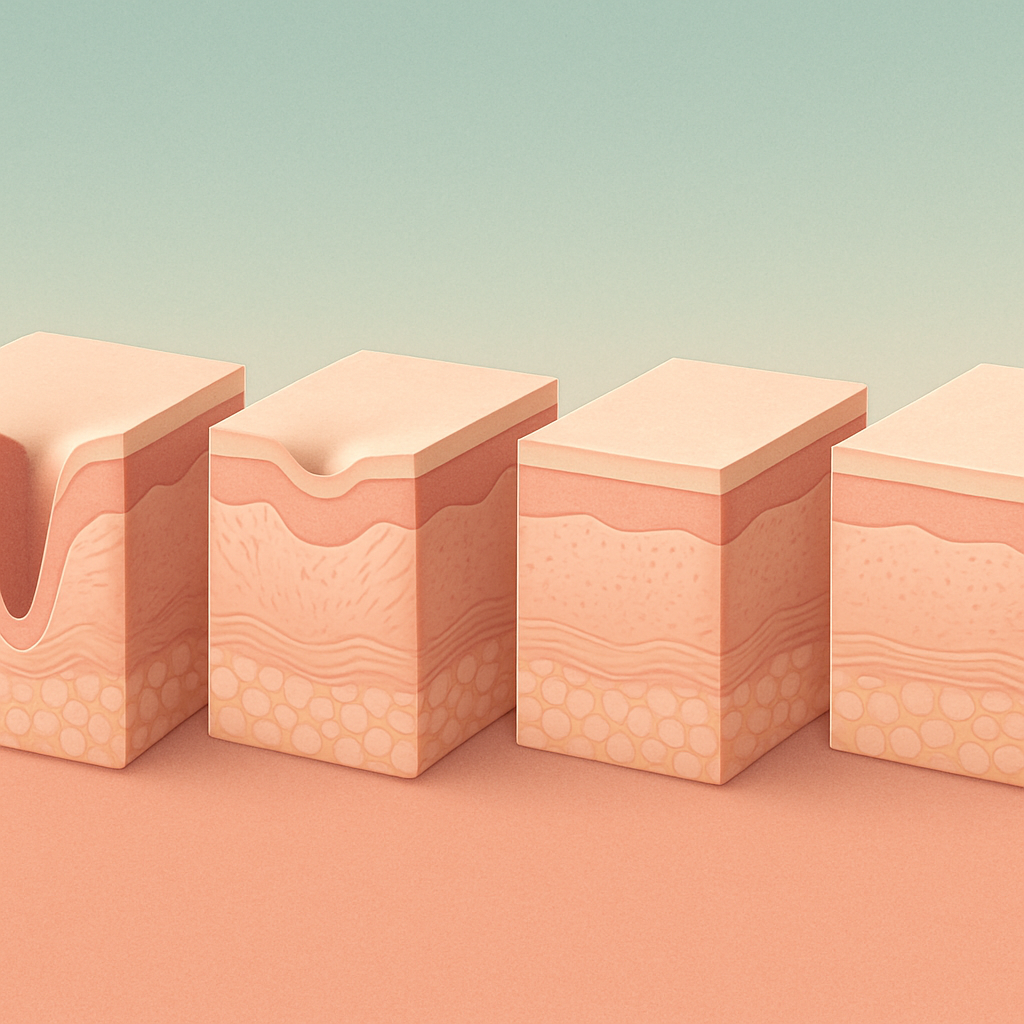
The recovery period after acne scar treatment generally takes three to twelve months or more. This is because a biological process is needed in which the damaged dermis produces and reorganizes new collagen. Most acne scar treatments are not completed in a single session and require three to about five repeat treatments at three- to four-week intervals. After each session, the skin repeats micro-damage and regeneration, gradually improving. There is individual variation in the recovery period depending on the person's skin condition, scar depth and metabolic rate — some patients may need six months, others more than a year.
Skin Regeneration Mechanism During Recovery
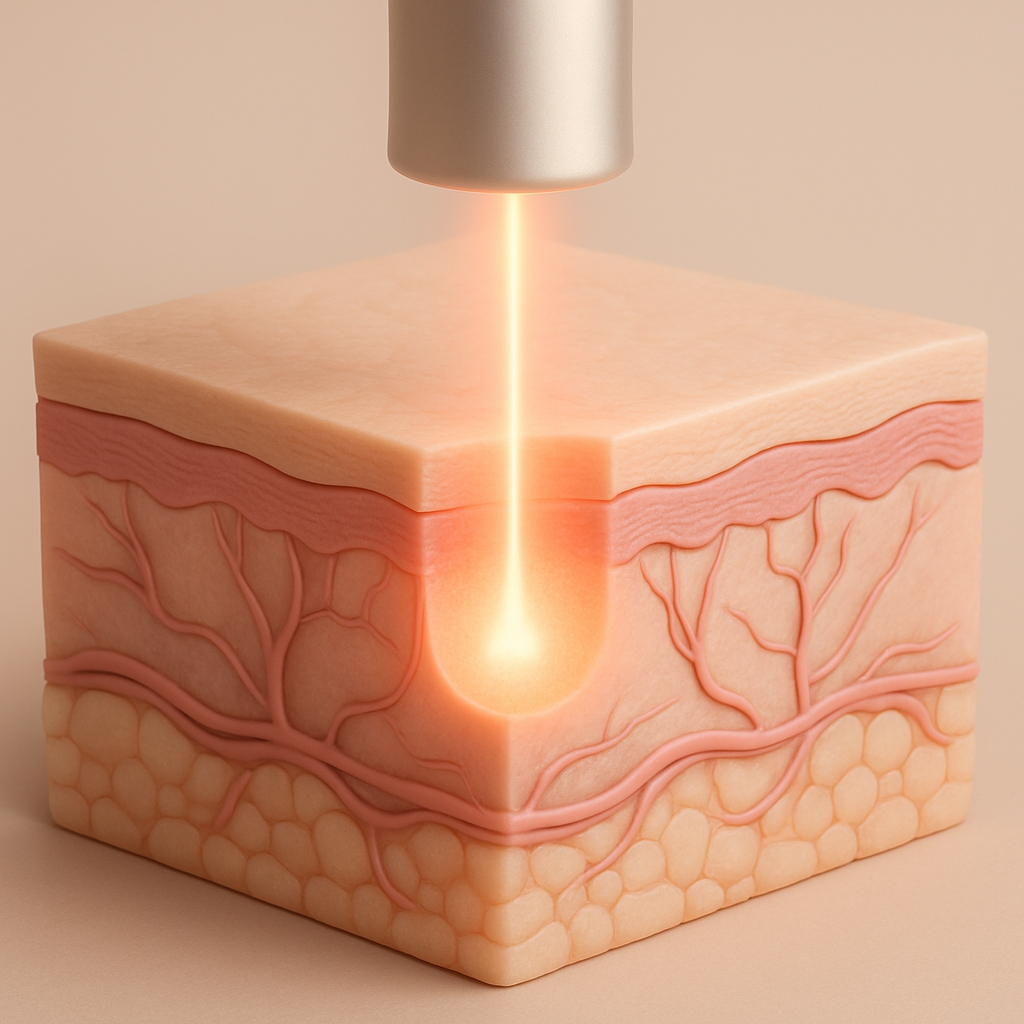
The core of the recovery period after acne scar treatment is collagen regeneration in the dermis. Treatments such as laser procedures, chemical peels, and microneedling deliberately inflict micro-damage on the skin surface and dermis to trigger the skin's self-healing response. During this self-healing process, fibroblasts are activated to synthesize new collagen and elastin. The first one to two weeks is the period when the inflammatory response appears, active collagen regeneration occurs between weeks two and eight, and after eight weeks the process advances to a stage where collagen matures and aligns. Because this process must proceed naturally without external stimulation, appropriate moisturizing, anti-inflammatory care, and UV protection are important during recovery.
Correlation Between Scar Depth and Recovery Period
The depth of acne scars is the most important factor determining the number of sessions needed and the recovery period. For shallow scars (1–2 mm), noticeable improvement can be seen over a period of about three months, but deep scars (3 mm or more) require at least six months or more of treatment and recovery. Among atrophic scars, the deepest — ice pick scars — are sharp and narrow, as if pricked with a needle, and this type is harder to treat and can have a longer recovery period than other scars.
Recovery Period by Acne Scar Type
Acne scars are broadly classified into three types, and the recovery period differs significantly by type. Accurately identifying the scar type allows a realistic estimate of the treatment period and the preparation time needed when establishing a treatment plan.
Atrophic Scars
Atrophic scars are the most common type of acne scar, with a depressed appearance. They occur when acne inflammation destroys collagen in the dermis, and the recovery period after treatment averages over six months. Atrophic scars are further divided into three: boxcar scars, depressed at right angles, needing three to four months of recovery; rolling scars, with rounded depressed borders, showing relatively fast improvement over three to five months; and ice pick scars, the deepest and narrowest, requiring long-term treatment of six months or more. Atrophic scars have a long recovery period because the damaged dermis must be sufficiently stimulated to generate new collagen.
Hypertrophic/Keloid Scars
Hypertrophic scars are raised, caused by excessive collagen production. The recovery period for this type is usually two to three months, shorter than for atrophic scars. Treatment of hypertrophic scars uses the Fraxel laser, CO2 laser, and conservative treatments such as silicone gel or compression therapy, and takes relatively little time to smooth the skin surface. However, because there is a risk of recurrence depending on an individual's keloid tendency, continued care may be needed even after recovery.
Post-Inflammatory Hyperpigmentation
Pigmentation scars are a state in which melanin pigment becomes excessively concentrated after acne inflammation. This involves little actual structural damage to the skin but a noticeable color issue. The recovery period is the shortest, at two to three months, and fast improvement can be expected with pigment-removal treatments such as IPL (intense pulsed light), pico laser, and laser toning. However, because UV exposure can worsen pigmentation, UV protection during recovery is very important.
Recovery Period by Major Acne Scar Treatment Method
Various methods are used for acne scar treatment, and each has a different recovery period and downtime. When choosing a treatment method, you should comprehensively consider not only the recovery period but also the expected effect, side effects, and impact on daily life.
Fractional Laser (Fraxel)
The Fraxel laser is a non-ablative laser using an erbium laser that selectively stimulates the dermis without ablating the skin surface. The recovery period after the procedure is one to two weeks, and its relatively short downtime makes it popular among office workers. The skin may be red with fine swelling for two to three days after the procedure, but at a level coverable with basic skincare products. The final effect is confirmed two to three months after the procedure, and three to five repeat sessions are needed at three-week intervals. Therefore the total treatment period requires three months or more.
Carbon Dioxide Laser (CO2)
The CO2 laser is an ablative laser that removes the epidermis, providing stronger stimulation and being effective for deep scars. The recovery period after the procedure is two to three weeks, longer than Fraxel, and downtime is considerable. Exudate and crust form during the first week, and recovery begins from the second week. Because it induces stronger collagen regeneration, it is highly effective for deep atrophic scars, and two to three sessions are needed at two- to three-week intervals. During recovery you must apply antibiotic ointment daily, and forcibly removing the crust can cause infection or pigmentation, so wait for it to shed naturally.
Microneedling
Microneedling is a method that creates thousands of tiny holes in the skin with fine needles to trigger the self-healing response. The recovery period after the procedure is the shortest, at three to five days, with almost no downtime, so return to daily life is fast. Skin redness and fine swelling may appear for one to two days after the procedure but subside quickly. However, since the effect is relatively gradual, it is typically repeated once a month for six months or more. Therefore, confirming the final effect requires six months or more.
Chemical Peeling
Chemical peeling is a method that chemically removes the epidermis and part of the dermis using an acidic solution. Acids of various concentrations such as glycolic acid, salicylic acid, and trichloroacetic acid (TCA) are used, and the higher the concentration, the longer the recovery period. Shallow peels (glycolic acid) have a very short recovery period of one to three days, medium-depth peels (TCA) one to two weeks, and deep peels (phenol) require about two to four weeks of recovery. Acne scar treatment usually uses medium-depth chemical peels, repeated three to six times at two- to four-week intervals, so the total treatment period is three to six months.
Essential Skincare During Recovery from Acne Scar Treatment
The success of the recovery period after acne scar treatment depends on skincare during recovery as much as on the procedure itself. Correct, evidence-based care promotes collagen regeneration, minimizes side effects, and maximizes the final effect.
UV Protection
UV protection is the most important care item during recovery after acne scar treatment. Skin damaged by the procedure is extremely sensitive to UV, and UV exposure worsens pigmentation and accelerates collagen breakdown. During recovery you should reapply sunscreen of SPF 50 or higher every two hours daily, minimize outdoor activity, and use a hat or sunglasses for physical protection. In particular, sun exposure should be avoided as much as possible within the first two weeks after the procedure.
Moisturizing Care
Moisturizing is essential during recovery of skin damaged by the procedure. If moisture evaporates while the skin barrier is damaged, recovery is delayed and itching can occur. Frequently use toners and essences containing moisturizing ingredients such as glycerin, ceramides, and hyaluronic acid, and finish with a light moisturizing cream. Adequate moisturizing morning and evening reduces skin itching and shortens the recovery period.
Anti-Inflammatory Care
The first one to two weeks of recovery after acne scar treatment is the period when the inflammatory response appears. Using antibiotic ointment or steroid cream prescribed by the medical staff as directed can minimize inflammation and accelerate recovery. Using a soothing cream containing anti-inflammatory ingredients such as centella and panthenol is also good, and excessive irritation or friction should be avoided.
Behaviors to Avoid
During recovery after acne scar treatment, several behaviors should be avoided. Touching or rubbing the treated area with your hands increases the risk of infection. Forcibly removing the crust that forms after a CO2 laser or chemical peel can cause infection, pigmentation, or additional scar formation, so wait for it to shed naturally. Also, during recovery you should avoid high-intensity exercise or exposure to high-heat environments such as saunas and jjimjilbangs, and it is best to limit drinking and smoking, which hinder skin recovery.
Variables in Recovery Period by Various Factors
The recovery period after acne scar treatment can change according to various individual factors. Even with the same treatment, recovery speed differs from person to person, so understanding your own physical conditions helps with a realistic estimate of the period.
Age and Skin Regeneration Capacity
Younger patients have a faster skin cell turnover rate and better collagen regeneration capacity than patients with aged skin. The recovery period for acne scar treatment in one's 20s averages three to four months, but for those 50 and older it can require more than six months. The older you are, the slower the skin recovery, so more patience over a longer period is needed.
Skin Type and Constitution
For oily skin, the inflammatory response may be stronger, so the recovery period can be longer. Conversely, dry skin may have more severe itching or irritation during recovery, so active moisturizing is needed. In addition, skin types prone to pigmentation (darker skin tones) have a higher risk of pigment-related complications, so more attention to UV protection is required.
Overall Health
Adequate sleep, balanced nutrition, and appropriate stress management affect the speed of skin recovery. If you have a chronic illness or low immunity, recovery may be delayed. In particular, during recovery after acne scar treatment, adequate intake of nutrients needed for collagen synthesis, such as vitamin C, protein, and iron, is helpful.
Complications During Recovery from Acne Scar Treatment
It is important to understand and address early the complications that, though rare, can occur during recovery after acne scar treatment. Most complications are preventable or can be minimized with early response.
Hyperpigmentation and Hypopigmentation
The most common complication during recovery after laser treatment of acne scars is post-inflammatory hyperpigmentation. Especially with darker skin tones, the treated area may become darker; this naturally improves as recovery progresses but can take several months. Conversely, post-inflammatory hypopigmentation is rare but, when it occurs, requires a longer recovery. To minimize pigmentation, thorough UV protection during recovery is essential.
Infection
Infection can occur during the recovery period when a crust forms after a CO2 laser or deep chemical peel. Forcibly removing the crust or keeping the area unclean increases the risk of bacterial infection. If signs of infection (increased swelling, pus, foul odor) appear, consult medical staff immediately.
Pigmentation or Worsening Scars
Rarely, new scars or keloids may form on the treated area during recovery. This is more likely in patients with a keloid tendency, so it is important to inform medical staff of your scar constitution before the procedure. Continuous monitoring and medical guidance during recovery are essential.
Q. Exactly how long does recovery after acne scar treatment take?
The recovery period after acne scar treatment varies by scar type and treatment method. In general it takes two to four weeks to see noticeable improvement, and confirming the final result requires three to twelve months or more. Depressed scars average over six months, while pigmentation scars average about two to three months. In addition, three to five repeat sessions are needed at three- to four-week intervals, so the total treatment period should be estimated accordingly.
Q. Can I return to daily life during recovery after a Fraxel laser procedure?
The Fraxel laser is a non-ablative laser with a relatively short recovery period, so you can return to daily life within one to two weeks of the procedure. However, the skin may be red with fine swelling for two to three days after the procedure, so if you have an important event, it is best to avoid scheduling it then. During recovery you can partially cover the redness with basic skincare products, but for the first week it is recommended to avoid color cosmetics and focus on basic care.
Q. When does the crust fall off during recovery after a CO2 laser procedure?
The crust that forms during recovery after a CO2 laser procedure usually appears from about one week and naturally sheds after two to three weeks. Because crust shedding varies by individual, it can last up to three weeks. Never remove it forcibly, as this can cause infection or pigmentation — wait for it to shed naturally. During the recovery period with crusting, applying antibiotic ointment daily and maintaining humidity can speed recovery.
Q. Is UV protection really important during recovery after acne scar treatment?
Yes, UV protection is the most important form of care during recovery after acne scar treatment. Laser-damaged skin is extremely sensitive to UV, and UV exposure worsens pigmentation and accelerates collagen breakdown, delaying recovery. During recovery you should reapply sunscreen of SPF 50 or higher every two hours, minimize outdoor activity, and use physical protection (a hat and sunglasses). Thorough UV protection shortens the recovery period and greatly improves the final result.
Q. When can I exercise or use a sauna during recovery after acne scar treatment?
High-heat environments such as high-intensity exercise, saunas and jjimjilbangs should be avoided early in recovery. In general, light walking or stretching is possible from two to three weeks after the procedure, but high-intensity exercise is recommended to begin at least four weeks later. It is best to avoid saunas and jjimjilbangs during recovery, and if needed, use them only briefly from at least two to three weeks later. Exercise or exposure to high heat can increase skin blood flow and worsen inflammation, so caution is needed.
Notice under Article 56 of the Medical Service Act: This article is intended to provide dermatological information and does not replace diagnosis or prescription. Results may vary from person to person.