Cold Ablation is a laser procedure that uses low-temperature plasma to minimize skin damage while inducing collagen regeneration. Unlike conventional high-temperature, heat-based lasers, Cold Ablation reduces thermal damage to the skin surface while producing effective collagen remodeling in the dermis. This article covers in detail the exact working principle of Cold Ablation, its clear advantages and disadvantages, the recovery process, and a comparison with other laser treatments.
Cold Ablation technology is gradually spreading in clinical practice and is used for various indications such as skin tone improvement, pore reduction, and scar regeneration. However, like all procedures, it does not have only advantages, and it is important to understand the expected effects and limitations based on accurate information before the procedure.
Working Principle and Technical Basis of Cold Ablation
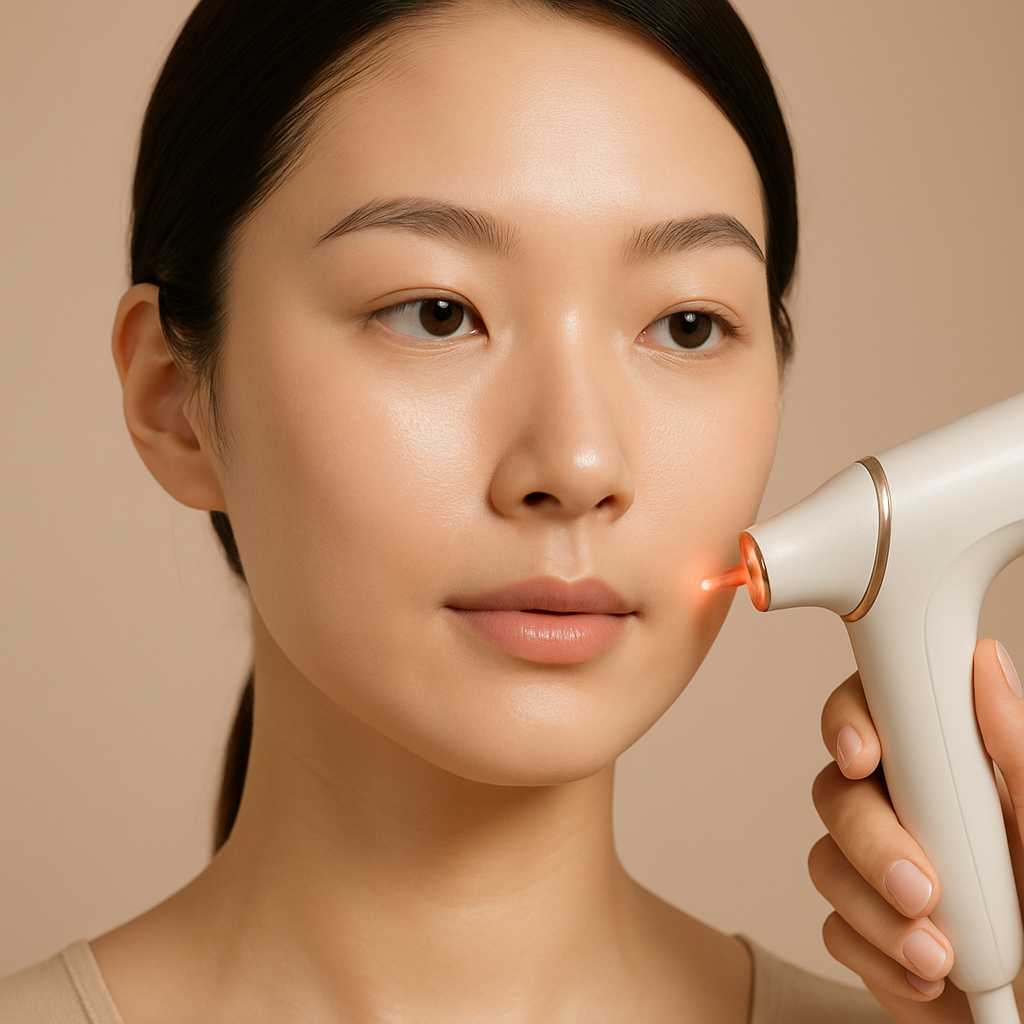
Cold Ablation works based on helium plasma technology. Plasma is an ionized gas state, generated using radiofrequency energy. What distinguishes it from conventional lasers is that heat generation is very limited. General laser ablation technology generates high temperatures of 2,000–3,000°C to simultaneously damage and regenerate the epidermis and dermis, but Cold Ablation induces cell activation through a non-thermal mechanism using the plasma's reactive oxygen species (ROS) and nitrogen reactive species (NRS).
It has the characteristic that action in the epidermis and dermis occurs separately. When the plasma contacts the epidermis, membrane damage and fine exfoliation of the cell surface occur, and because the energy reaching the dermis is very limited, burns or serious thermal damage do not appear. Instead, it stimulates growth factor secretion to promote the re-synthesis of type I and type III collagen. The core of Cold Ablation is that this mechanism achieves the two goals of epidermal preservation and dermal regeneration at the same time.
Energy Difference Between Plasma and Laser
Plasma technology is fundamentally different from lasers (light energy). A laser emits single-wavelength photons to selectively heat pigment or water, but plasma simultaneously emits multiple energy sources (ions, electrons, UV, visible light, etc.). Therefore, Cold Ablation is more suitable for overall skin surface activation and dermal regeneration than for pigment removal or removal of a specific target tissue.
Main Advantages of Cold Ablation
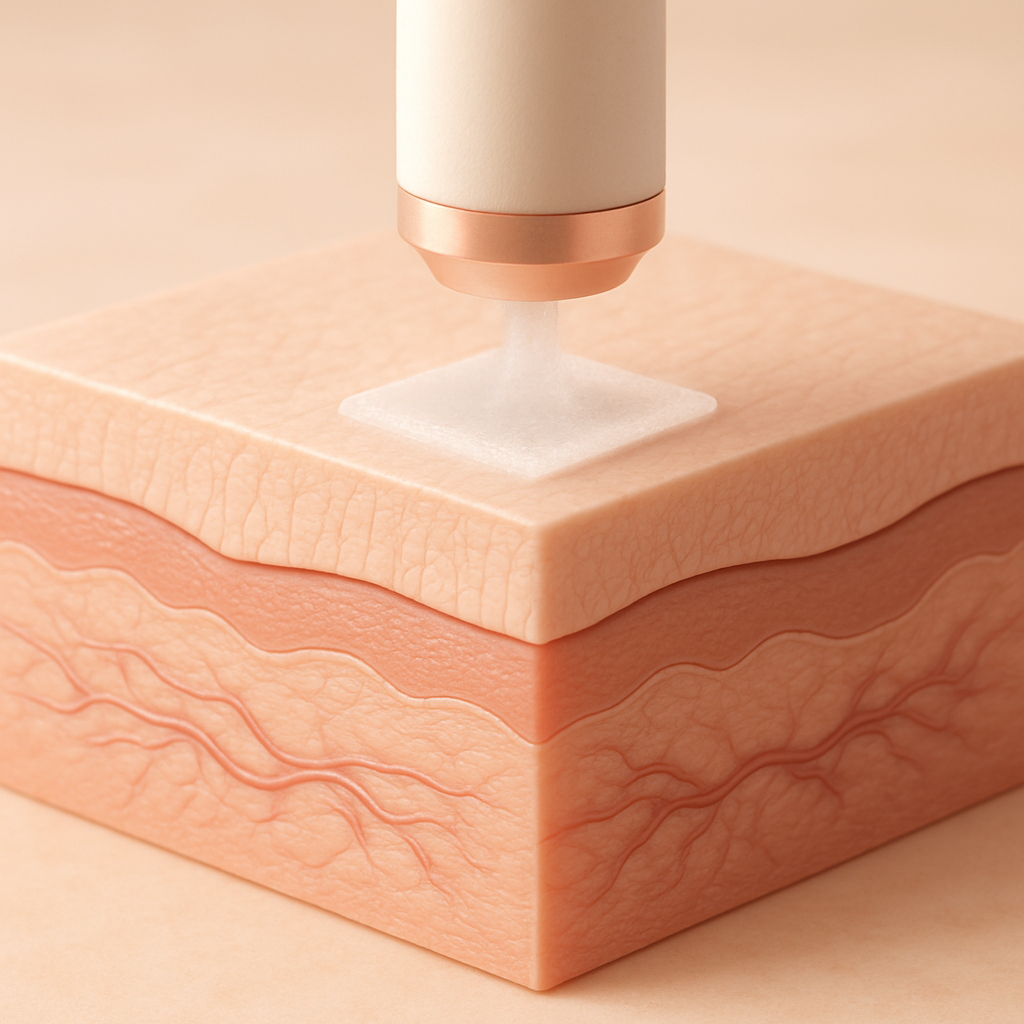
The reason Cold Ablation is drawing clinical attention is that it has several advantages over conventional ablative lasers. First, downtime is markedly shorter. With high-temperature lasers, the full epidermis is ablated, requiring a two- to three-week crust-formation period, but Cold Ablation minimizes epidermal damage, so return to daily life is possible within one week. This is a very important benefit for patients who find long time off work difficult due to their jobs.
Second, skin tone improves evenly. For pigment issues such as melasma, freckles, blemishes, and age spots, clinical research shows about 60–70% improvement after four to six weeks, with secondary pigmentation from thermal damage appearing only rarely. Repeat sessions are easy, and results tend to improve gradually through cumulative effects.
Third, dermal collagen regeneration occurs with a delay. Immediate change right after the procedure is limited, but over two to three months, a continuous conversion from type III to type I collagen occurs, so improvement in skin elasticity and texture appears over the long term. Thus, you can expect not only short-term results but also long-term effects.
Fourth, side effects are limited. The risks of nerve damage, infection, and burns are markedly lower than with conventional high-temperature ablative lasers, and pigmentation is rare. It can be performed relatively safely even in patients with sensitive skin or darker skin tones.
Pore Reduction and Skin Texture Improvement
The effect of Cold Ablation on pores and skin texture is considerable. As the plasma gently exfoliates the keratin layer of the epidermal surface, it contracts the skin around the pores, and during dermal regeneration, elastic fibers (elastin) and collagen are reorganized, visually reducing pore size. In particular, a tendency for pore diameter to decrease by an average of 20–30% is observed after four to eight weeks.
Facial Contour and Skin Sagging Improvement
Cold Ablation shows a synergistic effect when combined with non-incisional lifting or other non-invasive procedures. Skin surface activation and dermal regeneration make the overall facial contour sharper, and for mild skin sagging, a partial tightening effect may appear. However, it is limited for severe skin sagging.
Main Disadvantages and Limitations of Cold Ablation
While Cold Ablation has clear advantages, it also has limitations and disadvantages in certain situations. First, immediate change is limited. High-temperature ablative lasers show a noticeable skin reset effect right after the procedure, but Cold Ablation is characterized by delayed regeneration, so only fine erythema and slight dryness may appear during the first two weeks. Therefore, patients who want immediate skin improvement may be disappointed.
Second, there are limits to improving deep scars or severe skin damage. Because Cold Ablation acts on the epidermis and shallow dermis, deep or wide atrophic scars (ice pick scars, boxcar scars) require multiple sessions, and complete improvement is hard to expect. The Fraxel laser or the carbon dioxide ablative laser may be more effective.
Third, the number of sessions can increase. If you want high effect, three to six or more repeat sessions at four- to six-week intervals are often needed. This adds burden in terms of time and cost. In addition, because an adequate recovery period is needed between each session, planning over a long period is essential.
Fourth, the response differs by individual constitution. Some patients experience more effect than expected, while others feel only minimal change. In particular, for patients with very dark skin tones or a scarring tendency, predicting the effect is difficult, and the risk of complications can be relatively high.
Limitations During Recovery
A short downtime is an advantage of Cold Ablation, but skincare during recovery is very important. For one week after the procedure, avoid strong UV exposure and limit the use of irritating cosmetics (acids, retinoids, vitamin C, etc.). You should also avoid vigorous exercise, saunas, and swimming, which can be inconvenient for patients with an active lifestyle.
Uncertainty of Cost-Effectiveness
The cost of Cold Ablation is moderate per single session, but because repeat sessions are needed for optimal results, the total cost can be considerable. In particular, if three or more sessions are needed to see clear effects, the financial burden grows. Therefore, it is important to receive consultation on the exact cost and expected number of sessions before the procedure.
Comparison of Cold Ablation and Other Laser Treatments
To understand Cold Ablation correctly, a comparison with other dermatological procedures is essential. Because each method differs in working principle, effect, recovery period, and indications, the optimal choice differs by the patient's skin condition and goals.
Cold Ablation vs. High-Temperature Ablative Laser (CO2 laser)
The carbon dioxide ablative laser uses high-energy photons of a 2,940nm wavelength to rapidly heat water and ablate the full epidermis. Its immediate skin-reset effect is very large, and it is effective for deep scars and severe pigment issues. However, downtime is long at two to three weeks, with risks of burns, nerve damage, and secondary pigmentation. In contrast, Cold Ablation has short downtime and few side effects but slower onset of effect and limits in improving deep lesions.
Cold Ablation vs. Fraxel Laser
Fraxel is a non-ablative fractional laser that splits the laser beam into fine points (microbeams) to create selective thermal damage in the epidermis and dermis. Its downtime is slightly longer than Cold Ablation (5–10 days), but its scar improvement effect is superior. Cold Ablation gently stimulates the entire surface, whereas Fraxel strongly induces localized regeneration through point damage.
Cold Ablation vs. PicoWay/PicoSure (Picosecond Laser)
Picosecond lasers mechanically shatter pigment particles with ultra-short (picosecond) pulses. They are very effective for pigment removal (melasma, tattoos, age spots) but limited for whole-skin regeneration or pore reduction. Because Cold Ablation aims not only at pigment improvement but also at overall skin tone, texture, and elasticity improvement, it is more suitable when comprehensive skin improvement is needed.
Cold Ablation vs. Thermage/Ultracel (Radiofrequency/HIFU Lifting)
Thermage and Ultracel are non-invasive lifting procedures that apply thermal stimulation only to the dermis and subcutaneous layer without epidermal damage to induce collagen contraction and neogenesis. They have a large effect on improving skin sagging but no direct effect on pigment issues or pore improvement. Because Cold Ablation attempts epidermal activation and dermal regeneration simultaneously, comprehensive improvement is possible.
Recovery Process of Cold Ablation and Timing of Expected Effects

Skin changes after a Cold Ablation procedure progress over time. Understanding the exact recovery process lets you set realistic expectations.
Immediately After the Procedure to Day 3
Immediately after the procedure, fine erythema and a warm sensation may appear. This is a normal inflammatory response caused by plasma activation. The skin may feel slightly dry or taut, and some patients may develop fine swelling. Daily activities are possible from the day of the procedure, and light work or going out is also possible.
Days 4–7
Erythema gradually decreases, and the skin begins to return to a normal tone. Fine flaking may appear, but a thick crust like that of a high-temperature ablative laser does not form. At this stage, most patients can normalize their social life at a level coverable with makeup.
Weeks 2–4
Erythema almost disappears, and the skin's fine texture begins to soften. Pigment improvement gradually begins to appear, and the skin tone looks slightly clearer. However, this stage is not the complete result, so patience is required from the patient.
Weeks 6–12
This is when the true long-term effect of Cold Ablation appears. As dermal collagen re-synthesis peaks, skin elasticity noticeably improves, pores shrink, and the overall skin texture becomes smooth. Pigmentation can be observed to improve by about 60–70%. Because there is variation by individual constitution, some patients feel the effect fully after four weeks, while others may experience the maximum effect after eight weeks.
Side Effects and Precautions of Cold Ablation
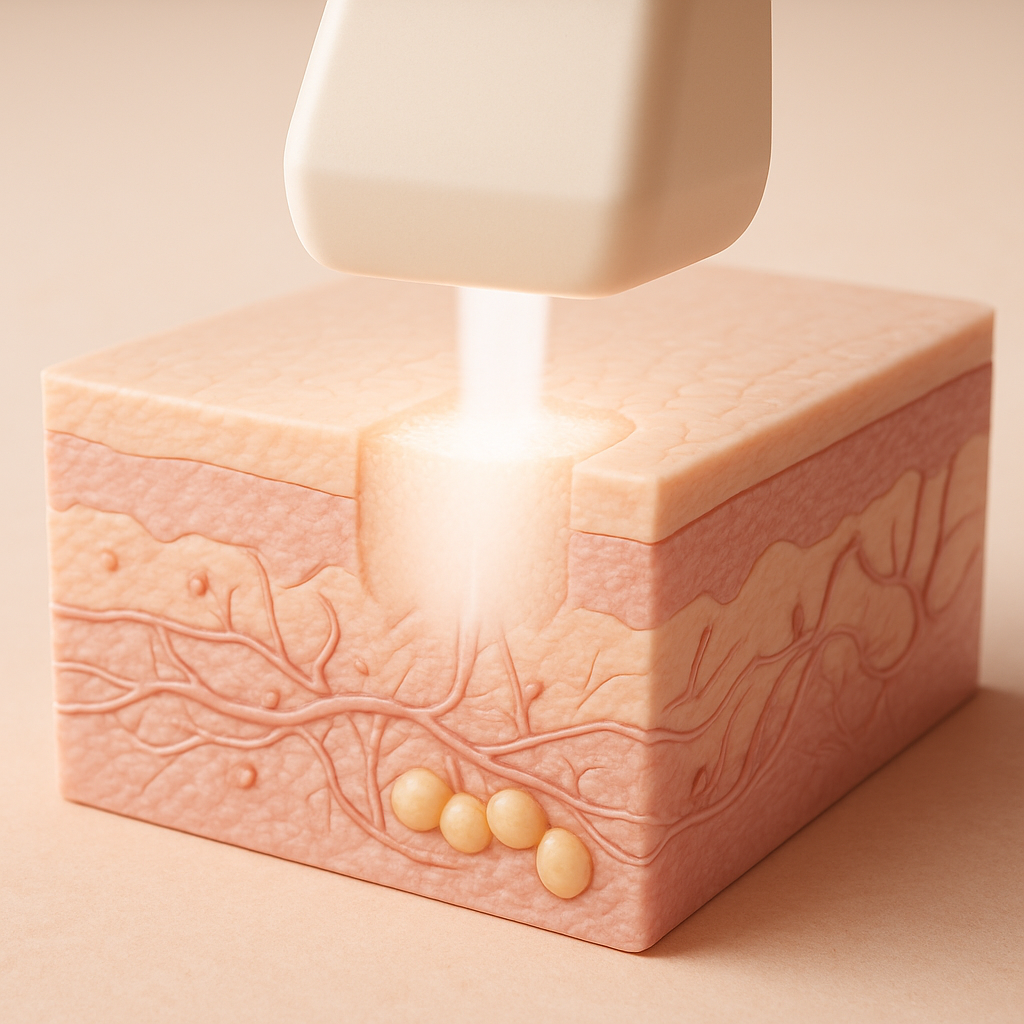
Like all medical procedures, Cold Ablation can have side effects. However, it is characterized by markedly fewer side effects than conventional high-temperature ablative lasers.
Common Side Effects (Almost All Resolve Naturally)
Erythema, fine swelling, dryness, and a warm sensation are normal inflammatory responses and usually disappear completely within one to two weeks. Fine itching may occur, but it does not always happen, and even when it does, it is relieved with proper moisturizing care.
Rare Side Effects
Post-inflammatory hyperpigmentation appears far more rarely than with high-temperature ablative lasers, and even when it occurs, it is minimal and recovers naturally over several weeks to months. Hypopigmentation is very rare with Cold Ablation. There may be a temporary change in skin sensitivity, but it does not persist over the long term.
Very Rare Complications
Infection is almost entirely preventable with proper moisturizing and antibiotic ointment use. Keloid scars or hypertrophic scars can occur very rarely in patients with a scarring tendency, and at-risk groups can be identified through prior consultation. Nerve damage or permanent pigment change almost never occurs with a technically trained operator.
Precautions to Avoid Problems
For at least one week after the procedure, use sunscreen (SPF 50 or higher) daily. Strong UV exposure is a major cause of secondary pigmentation. For one week after the procedure, you must not use irritating cosmetics (alpha-arbutin, niacinamide, high-concentration vitamin C, retinoids, glycolic acid, salicylic acid). For several days, avoid excessive sweating (saunas, vigorous exercise) to reduce the risk of infection. Because results may vary by individual, it is important to set realistic expectations with a medical professional in advance.
Indications and Contraindications of Cold Ablation
Cold Ablation is not suitable for every patient and every skin problem. Understanding the exact indications and contraindications is the foundation of a safe procedure.
Indications (Procedure Recommended)
Pigment issues: excellent for improving melasma, freckles, age spots, blemishes, and dull skin tone. Enlarged pores: effective for fine pore reduction and skin texture improvement. Worsened skin texture: overall improvement of rough skin and photoaging symptoms. Shallow acne scars: improvement of shallow, small atrophic scars over three to six sessions. Early stage of reduced skin elasticity: used as a combination procedure for prevention purposes in those aged 30–40. Uneven skin tone: improvement of skin with flushing, rosacea, or excessive erythema.
Contraindications (Procedure Not Recommended or Absolutely Prohibited)
Active infection (herpes, bacterial infection, fungal infection): high risk of infection spread after the procedure. Scarring tendency or history of keloids: risk of hypertrophic scar or keloid formation. Extremely dark skin tone: setting procedure parameters is difficult, with a high risk of pigmentation. Taking photosensitizing drugs: doxycycline, some antibiotics, fluoroquinolones, etc. Recent radiation therapy or during chemotherapy: the skin's self-recovery ability is severely reduced. During pregnancy: avoid, as the effect on the fetus is unknown. Active skin disease (severe atopic dermatitis, acute eczema, psoriasis): the procedure can worsen symptoms. Severe deep scars (severe atrophic scars, ice pick scars): in this case other methods such as Fraxel or radiofrequency fillers are more suitable.
Frequently Asked Questions (FAQ)
Q. Is Cold Ablation really less painful?
Pain during a Cold Ablation procedure varies by individual, but most patients report it to be markedly lower than with high-temperature ablative lasers. According to clinical research, during the procedure patients feel only a warm sensation or slight tingling, and cases requiring painkillers are very rare. There may be a slight stinging sensation in the evening after the procedure, but it is well managed with over-the-counter painkillers (such as acetaminophen). Results may vary by individual.
Q. How many Cold Ablation sessions do I need to see noticeable results?
It depends on the degree of effect and the target of treatment. For pigment improvement, about 30–40% improvement may be seen even after one session, but if you want clear improvement of 60–70% or more, three to six sessions at four- to six-week intervals are recommended. Pore reduction or skin texture improvement often requires three or more sessions. Deep scar improvement may require five to eight or more sessions, and considering the limits of the effect, combination with other procedures may be recommended. Because the number of sessions needed is determined by an individual's skin regeneration capacity, age, and degree of skin damage, an accurate plan requires consultation with a medical professional.
Q. Is UV protection really important after Cold Ablation? How long should it continue?
UV protection is very important after a Cold Ablation procedure. Immediately after the procedure, the skin is temporarily more sensitive to UV, and without adequate UV protection the risk of secondary pigmentation increases. For at least two weeks, use a broad-spectrum sunscreen of SPF 50 or higher daily and avoid direct sunlight. Ideally, careful UV management should continue for four weeks after the procedure. UV protection includes not only sunscreen but also physical barriers such as a hat, sunglasses, and long sleeves. During seasons with high UV exposure (spring to summer), avoiding Cold Ablation or limiting outdoor activity after the procedure is recommended for safer results.
Q. How should I choose between Cold Ablation and a high-temperature ablative laser?
The choice between the two treatments depends on the patient's skin condition, goals, schedule, and willingness to accept risk. Cold Ablation is recommended for patients who want gradual results with short downtime and few side effects, patients for whom long time off work is difficult, and patients with sensitive skin or a risk of pigmentation. On the other hand, for patients who want an immediate dramatic skin reset, can accept two to three weeks of recovery, and have deep scars or severe pigment issues, a high-temperature ablative laser (CO2 laser) may be more effective. According to clinical research, Cold Ablation is a better choice if mild pigment issues and skin tone improvement are the main goals, while a high-temperature ablative laser is better if severe photoaging or deep scar improvement is the goal. Because results may vary by individual, it is important to establish a personalized treatment plan through detailed consultation with a medical professional.
Q. Are there any activities or products I should specifically avoid after a Cold Ablation procedure?
There are things to avoid for one week after the procedure. Strenuous exercise, saunas, jjimjilbangs, and swimming increase excessive sweating and the risk of infection, so they should be avoided. Avoid irritating cosmetics (high-concentration vitamin C, alpha-arbutin, retinoids, glycolic acid, salicylic acid, niacinamide) and use only gentle cleansing and non-irritating moisturizing products. Do not touch or rub the face, and do not try to remove the crust (scab) by hand. Drinking and smoking also hinder skin recovery, so avoiding them for at least one week is recommended. Use the antibiotic ointment and moisturizing cream prescribed after the procedure carefully as directed by the medical professional. Results may vary by individual, and for the safest results it is best to receive individual consultation on specific post-procedure care from the treating medical professional.
Notice under Article 56 of the Medical Service Act: This article is intended to provide dermatological information and does not replace diagnosis or prescription. Results may vary from person to person. Always consult a medical professional before the procedure.