Combining painless injection with laser treatment is a treatment approach that minimizes pain during the procedure while maximizing skin improvement at the same time. This article focuses on the principles, effects, side effects, and safety of receiving the two procedures together.
Working Principle and Characteristics of Painless Injection

Painless injection is a procedure that injects a local anesthetic into the spinal canal to temporarily block sensory and motor nerves in the lower body. The anesthetic effect generally appears within 15 minutes and lasts three to four hours. The main drugs used in painless injection are local anesthetics such as lidocaine and ropivacaine, which block the nerve's sodium channels to inhibit pain signal transmission.
Nerve Block Mechanism of Painless Injection
When a painless injection is delivered into the spinal canal, it diffuses into the cerebrospinal fluid (CSF) and acts on the dura mater surrounding the nerve roots. The local anesthetic closes voltage-dependent sodium channels on the surface of the nerve cell axon, preventing the generation of an action potential. In this process, pain, temperature sensation, and pressure sensation are blocked sequentially, and motor nerves are also inhibited.
Drug Concentration and Diffusion Range
The effective range of a painless injection is determined by the concentration, volume, and baricity of the injected drug. Hyperbaric solutions accumulate more in the lower part of the body under gravity, while hypobaric solutions diffuse upward. In general, it is injected into the lower spine (L3–L4 or L4–L5) and blocks several segments of the spinal nerves over about 5 to 10 minutes.
Basic Principle of Laser Treatment
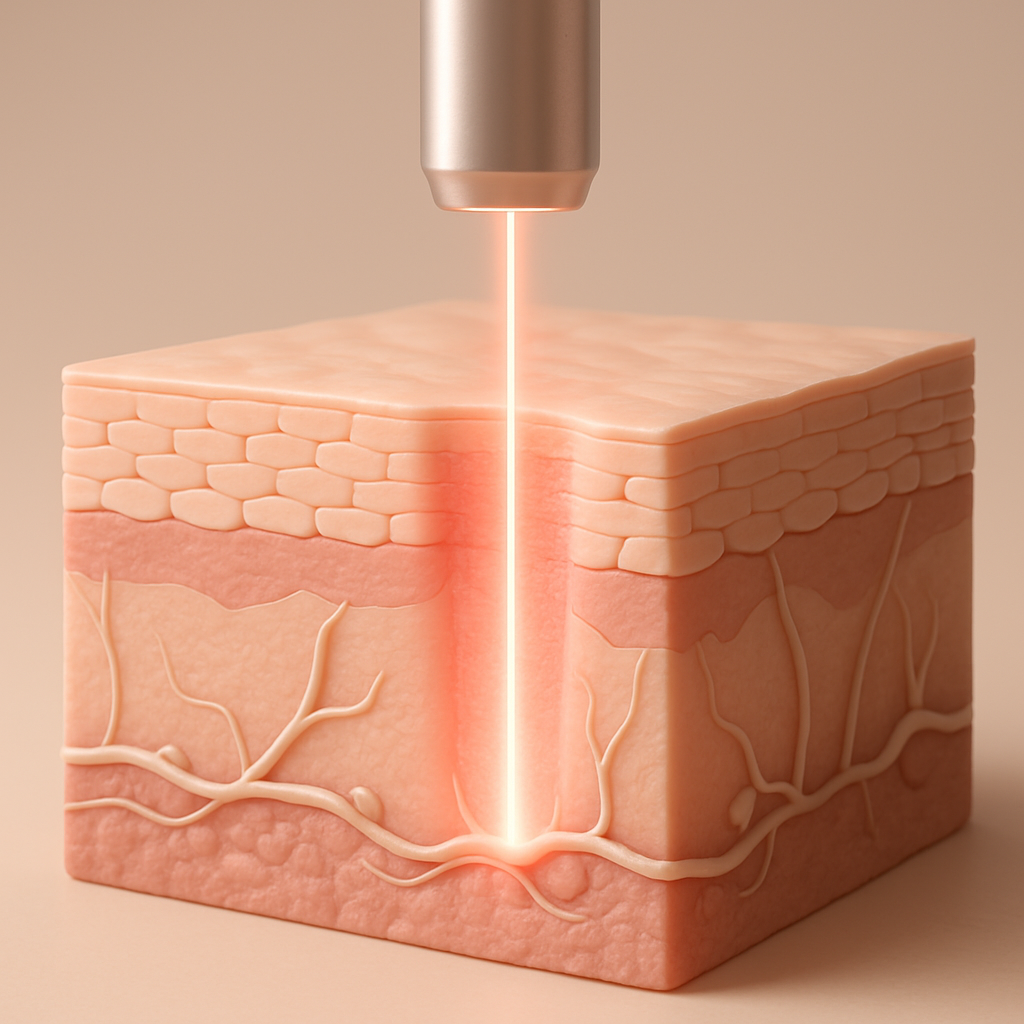
Laser treatment is a procedure that irradiates the skin with light energy of a specific wavelength to selectively generate heat only in the target tissue. Depending on the skin structure, the amount of energy reaching the epidermis, dermis, and subcutaneous tissue differs, inducing various biological responses such as pigment removal, collagen regeneration, and vessel closure. Using painless injection together can markedly reduce pain and discomfort during the procedure.
Relationship Between Wavelength and Tissue Penetration Depth
The longer the laser's wavelength, the deeper it penetrates skin tissue. For example, the 532nm wavelength (green laser) mainly targets melanin in the epidermis, while the 1064nm wavelength (Nd:YAG laser) penetrates deep into the dermis to treat vessels and pigment simultaneously. The 2940nm wavelength (erbium laser) is strongly absorbed by water and has an excellent epidermal ablation effect.
Collagen Remodeling Process
After laser irradiation, when fibroblasts in the dermis recognize damaged collagen, they stimulate the synthesis of new type I and type III collagen. This process is not immediate and generally proceeds over 4 to 12 weeks after the procedure. As a result, effects such as increased skin elasticity, wrinkle improvement, and even skin tone appear.
Synergistic Effect of Combining Painless Injection with Laser Treatment
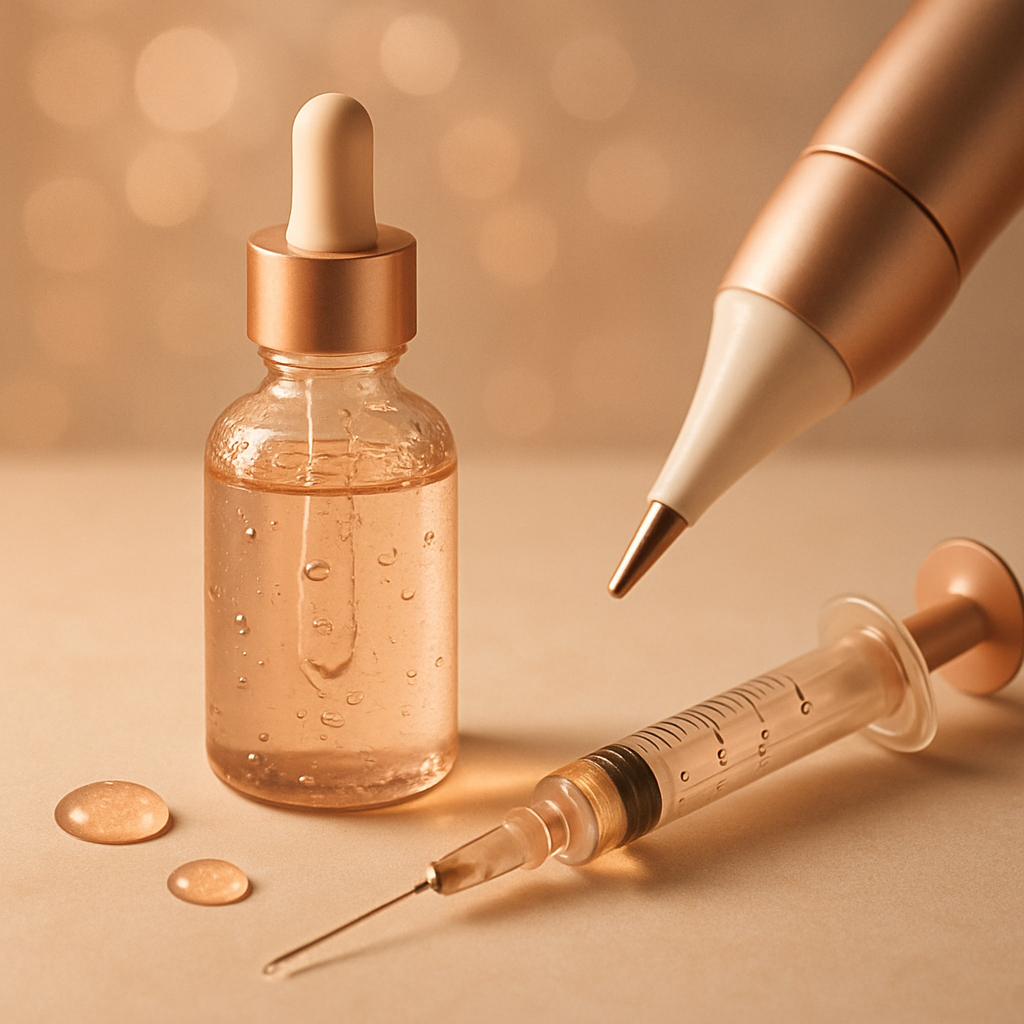
Performing painless injection together with laser treatment improves both patient convenience and procedure efficacy. Because the painless injection completely blocks pain, the operator can focus on stable, precise laser irradiation, and the patient minimizes body movement, reducing the risk of side effects. The advantages of this combined approach are especially pronounced in procedures over broad areas or high-energy laser treatments.
Stable Procedure Through Pain Blockade
Pain felt by the patient during a laser procedure induces body movement, which hinders accurate laser beam irradiation. When pain is completely blocked with a painless injection, the patient does not move, so the laser's irradiation pattern becomes uniform and precise. This advantage is especially large in sensitive areas such as the face, neck, and arms, and it also shortens the procedure time.
Enhanced Skin Reactivity
The vascular dilation and increased blood flow caused by a painless injection can actually increase the skin's thermal reactivity. This makes the skin respond more strongly to the same laser energy, improving the efficiency of the treatment effect. In addition, sympathetic suppression from spinal anesthesia relaxes blood vessels, which can also positively affect control of the inflammatory response after a laser procedure.
Side Effects and Precautions When Combining Painless Injection with Laser
When combining painless injection with laser treatment, you must consider not only the side effects of each procedure but also the possibility of complications from their interaction. Immediately after spinal anesthesia, low blood pressure, bradycardia (low heart rate), and nausea can occur, and receiving a laser procedure in this state can worsen these symptoms.
Potential Side Effects of Spinal Anesthesia
A common side effect of spinal anesthesia is post-dural puncture headache (PDPH). This occurs because, when the spinal canal is punctured, the dura is damaged and cerebrospinal fluid leaks, lowering intracranial pressure. The headache usually appears within 24 to 48 hours after the procedure, is relieved when lying down, and worsens when sitting or standing. It generally recovers naturally within a few days, but in severe cases an epidural blood patch procedure may be needed.
Direct Side Effects of the Laser Procedure
The main side effects appearing on the skin after laser treatment are erythema (redness), swelling, and crust (scab) formation. In particular, using a high-energy ablative laser (e.g., CO2 laser, erbium laser) causes temporary but clear ablation. In general, the crust is naturally removed 5 to 7 days after the procedure, but the period can vary by an individual's skin recovery capacity.
Interaction of Blood Pressure Changes and Anesthesia Complications
Sympathetic suppression from spinal anesthesia lowers blood pressure and reduces heart rate. Receiving a high-energy laser procedure in this state weakens the body's stress response, so the body may not respond immediately when excessive thermal damage occurs. Therefore, close collaboration between the anesthesiologist and the dermatologist is essential during a combined procedure.
Essential Examinations and Preparation Before the Combined Procedure
Before combining painless injection with laser treatment, both a systemic assessment and a skin diagnosis are needed. General health checks such as blood tests, an electrocardiogram, and blood pressure measurement are essential to judge the safety of spinal anesthesia. At the same time, skin type assessment (Fitzpatrick scale), degree of pigmentation, and skin elasticity measurement are used to determine a safe energy level for the laser procedure.
Confirming Contraindications
Absolute contraindications for spinal anesthesia include patient refusal, infection at the puncture site, hypovolemia, and coagulation disorders. In particular, patients taking anticoagulants (warfarin, apixaban, etc.) must stop the medication for an adequate period (generally 5 to 7 days) before the procedure. Contraindications for the laser procedure include active infection, severe pigmentation (dark skin), and procedures on certain areas during pregnancy.
Skin Preparation Protocol
From one week before the procedure, use sunscreen (SPF 50 or higher) daily and stop products containing vitamin A derivatives (retinoids). It is also best to avoid irritating cosmetics (AHAs, BHAs, vitamin C essence, etc.) from 3 to 5 days beforehand. This is to prevent irritant dermatitis or pigmentation after the procedure.
Recovery Care After the Combined Procedure and Long-Term Results
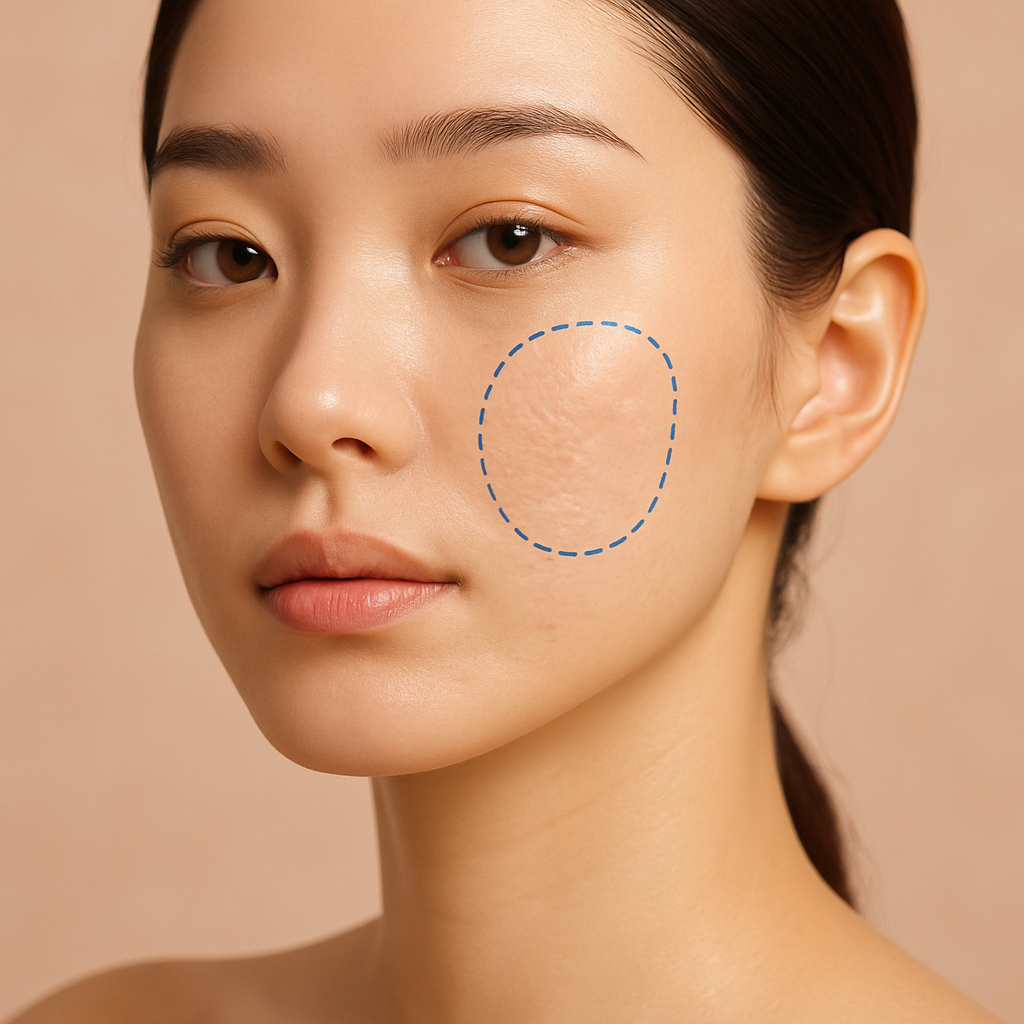
The recovery period after combining painless injection with laser treatment varies greatly by the laser type and set energy. After a non-ablative laser procedure (e.g., IPL, 1064nm Nd:YAG), there is almost no downtime, so normal activity is possible from the next day, but after an ablative laser procedure (CO2, erbium), a recovery period of one to two weeks is needed.
Immediate Recovery Phase (Day of the Procedure to Day 3)
Right after the procedure, it takes 4 to 6 hours for the spinal anesthesia effect to fully recover. During this period, sensation and motor function in the lower body gradually return, and it is best for the patient to remain lying down or semi-reclined. It is normal for erythema, swelling, and mild stinging to appear at the laser-treated area, and anti-inflammatory cream (steroid cream or centella cream) is applied every 4 to 6 hours. Using a cooling pack for 15 to 20 minutes every 2 hours can quickly reduce swelling.
Mid Recovery (Days 4–14)
From day 4, the crust (scab) begins to shed naturally. Forcibly removing it during this period can leave pigmentation or scarring, so it is important to wait until it is removed naturally. Wash the face with lukewarm water and a mild cleanser, and remove water by patting gently rather than rubbing. Reapply sunscreen of SPF 50 or higher every 2 hours daily, and especially minimize outdoor activity.
Long-Term Results and Re-Treatment Plan
The final result of painless injection with laser treatment appears most clearly 8 to 12 weeks after the procedure. During this period, new collagen synthesis proceeds, and skin tone and elasticity continuously improve. To achieve the desired result, three to five re-treatments are generally needed at four- to six-week intervals, and the treatment plan differs by an individual's skin condition and goals.
Combined Procedure vs. Standalone Procedure: A Comparative Analysis
Receiving painless injection together with a laser is not always best. The choice should differ by the procedure scope, the patient's pain sensitivity, and overall health. When using a non-ablative laser on a small area (e.g., part of the face), adequate pain management may be possible with topical anesthetic cream or cooling alone.
Advantages of the Combined Procedure
Complete pain blockade enables broad procedures, ensures stable irradiation by the operator, and results in high treatment efficiency. It is especially efficient when treating wide areas such as the entire face, neck, forearms, and legs at once. In addition, when using a high-energy ablative laser, it can completely eliminate body movement due to pain, preventing uneven results.
Advantages of the Standalone Procedure
Using only local anesthesia avoids systemic anesthesia-related side effects such as post-dural puncture headache and low blood pressure. Recovery is faster, and in many cases daily activities are possible on the day of the procedure. In addition, because there are fewer preparation steps and contraindication checks before the procedure, the treatment schedule is more flexible.
Q. How long does the procedure take when combining painless injection with laser treatment?
It takes 15 minutes for the painless injection to take effect and 5 to 10 minutes to prepare for the spinal puncture, and the laser procedure takes 20 minutes to 1 hour depending on the treatment area. Therefore, the total time from preparation to completion is about 1 hour 30 minutes to 2 hours. Including the 4- to 6-hour anesthesia recovery time after the procedure, the total hospital visit is about 5 to 7 hours.
Q. Will side effects increase if I receive laser treatment after a painless injection?
In general, side effects do not increase. Rather, eliminating body movement caused by pain can prevent burns or uneven pigmentation from inaccurate laser irradiation. However, because the inherent side effects of spinal anesthesia (post-dural puncture headache, low blood pressure) and laser side effects (erythema, swelling, crust) can occur simultaneously, careful monitoring by specialized medical staff is essential.
Q. When can I return to daily life after the combined procedure?
After the spinal anesthesia effect recovers (about 6 hours), basic daily life is possible, but physical activity (exercise, lifting heavy objects) is best started at least 24 hours later. Downtime differs by the type of laser procedure: with a non-ablative laser, makeup and normal activities are possible from the next day, while an ablative laser requires a recovery period of one to two weeks.
Q. I am taking anticoagulants — can I receive the combined procedure?
If you are taking anticoagulants, the risk of a spinal hematoma during spinal anesthesia increases, making it an absolute contraindication. In general, warfarin must be stopped 5 to 7 days beforehand, and apixaban and dabigatran 2 to 3 days beforehand, before proceeding with treatment. You must consult your doctor about your medications before deciding on a procedure schedule.
Q. What should I do if pigmentation occurs after the combined procedure?
Temporary post-inflammatory hyperpigmentation after the procedure is a common side effect and mostly recovers naturally within three to six months. During recovery, daily use of sunscreen (SPF 50 or higher) and avoiding irritating cosmetics are important. If pigmentation remains even after six months, it can be improved with low-energy laser treatment or brightening procedures (chemical peels, vitamin C iontophoresis, etc.).
Notice under Article 56 of the Medical Service Act: This article is intended to provide dermatological and anesthesiological information about combining painless injection with laser treatment and does not replace diagnosis or prescription. Because results and safety may differ depending on an individual's overall health, skin type, and medication history, please decide on a procedure only after consulting a qualified medical professional.