Acne scar regeneration laser aftercare following acne scar laser treatment is an essential care process that helps the damaged epidermis and dermis recover after the procedure and promotes collagen regeneration. The acne scar regeneration laser used to improve depressed scars or irregular skin texture works by creating microscopic thermal treatment zones that stimulate fibroblasts in the dermis. If proper acne scar regeneration laser aftercare is not followed immediately after treatment, the dermal remodeling effect can be diminished by half, and side effects such as post-inflammatory hyperpigmentation may occur. Therefore, systematic acne scar regeneration laser aftercare is essential to quickly restore the skin barrier and reliably guide the regeneration response.
1. How the Acne Scar Regeneration Laser Works and the Skin Recovery Mechanism

The laser used for acne scar treatment causes microscopic thermal damage in the epidermal and dermal tissue, triggering the body's natural wound-healing response. When laser energy is delivered to the skin, fibroblasts are activated in response to the thermal stimulus, promoting the synthesis of Type I and Type III collagen. During this process, the dermal layer beneath the depressed acne scar gradually fills in, improving skin texture.
Microthermal Injury and the Re-Epithelialization Stage
When the laser beam creates microscopic channels on the skin surface or delivers thermal stimulation, an inflammatory response begins within the first 24 hours. As platelets aggregate and growth factors are released, epithelial cells migrate around the microinjury sites and re-epithelialization proceeds. During this period, thorough hygiene and a moist wound environment are essential to protect the damaged skin barrier and prevent infection from outside microorganisms.
Dermal Collagen Remodeling Process
After re-epithelialization is complete, continuous collagen remodeling takes place within the dermis over the following weeks to months. As the initially formed connective tissue is reorganized, it is replaced with a denser, more elastic dermal structure. Therefore, maintaining consistent hydration and sun protection not only on the day of treatment but for months afterward plays a decisive role in completing the remodeling effect.
2. Laser Treatment and Regeneration Response by Acne Scar Type
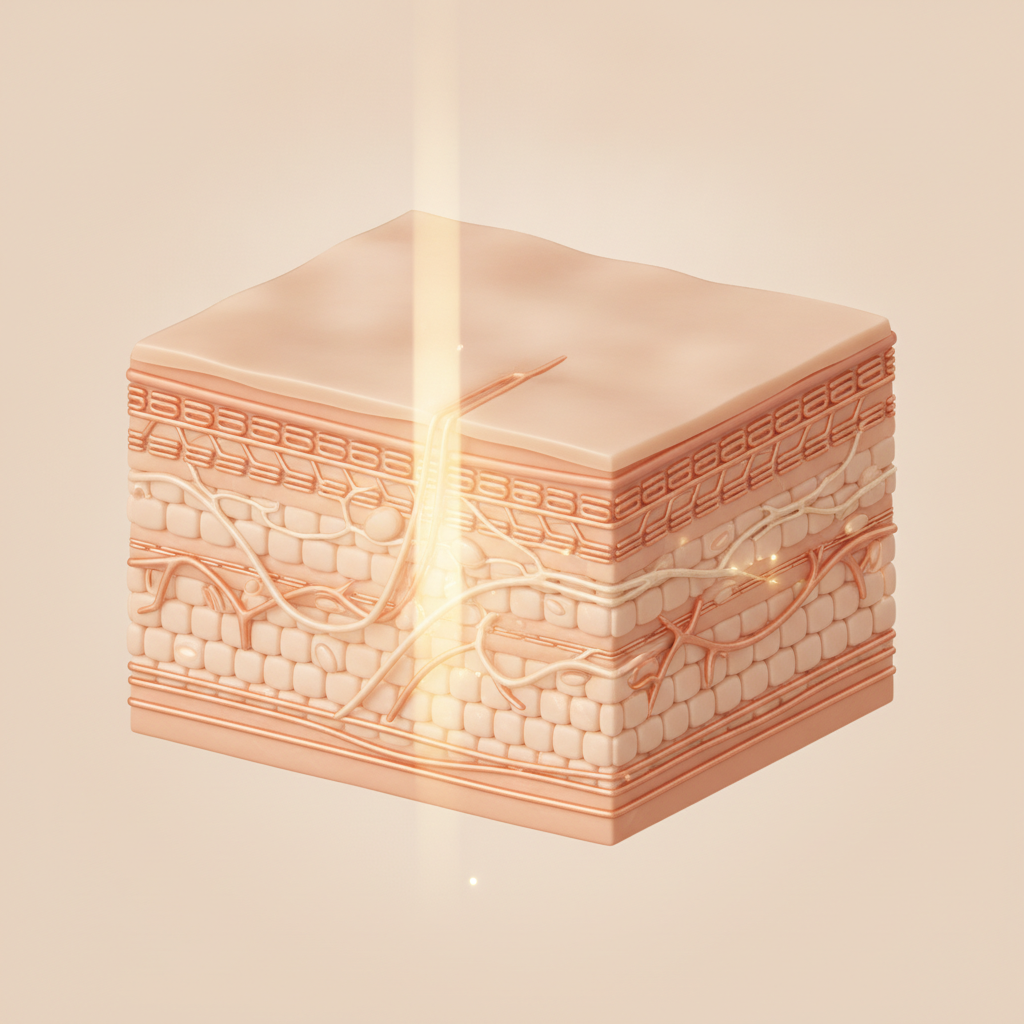
Acne scars are classified as icepick, boxcar, or rolling scars depending on the extent and shape of dermal damage, and the laser's energy penetration depth and application method differ for each type.
Managing Icepick and Boxcar Scars
Icepick scars have well-defined borders and considerable depth, so strong laser parameters capable of delivering energy deep into the dermis are needed. Boxcar scars also often require ablative laser stimulation to soften their vertical, cliff-like borders. Because these scar types tend to form relatively firm microcrusts after treatment, care emphasizes avoiding artificial stimulation until the crust sheds naturally.
Rolling Scars and Reconstruction of Dermal Fibrous Bands
Rolling scars are mainly caused by fibrous bands that tether the skin from beneath the dermis. Fraxel lasers or non-ablative dermal-stimulation lasers are used to loosen these fibrous bands and induce collagen regeneration. Because dermal swelling and mild erythema accompany treatment, early cooling care is needed to soothe the skin and reduce heat sensation.
3. Comparing Regeneration Aftercare for Ablative vs. Non-Ablative Lasers
Because the extent of epidermal damage and downtime vary greatly depending on the characteristics of the laser device used, it is important to understand the aftercare approach appropriate to each laser type.
Ablative and non-ablative lasers show clear differences in the wound-healing process and stage-by-stage aftercare rules depending on whether the epidermis is directly removed.
| Category | Ablative Laser | Non-Ablative Laser |
|---|---|---|
| Epidermal Damage | Precise ablation of the epidermis and formation of microscopic channels | Epidermis remains intact; selective thermal stimulation of the dermis |
| Downtime (Recovery Period) | About 7–14 days (crust formation and erythema) | About 2–5 days (mild swelling and slight erythema) |
| When Cleansing/Makeup Can Resume | After crust formation and stabilization (usually after 3–5 days) | Gentle cleansing possible from the day after treatment |
| Key Regeneration Care Rule | Occlusive regenerative ointment and exudate management | Highly moisturizing cream and sun protection |
Stage-by-Stage Recovery Guide After Treatment
From immediately after treatment through day 3, the skin is in its most sensitive inflammatory phase. During this period, apply cold compresses to reduce heat sensation and apply the prescribed antibiotic ointment or occlusive regenerative cream to prevent the skin from drying out. Between days 4 and 7, microcrusts begin to shed; letting them fall off naturally rather than picking at them helps prevent hyperpigmentation or secondary scarring. From two weeks onward, the skin barrier is being rebuilt, so focus on brightening care and sun protection.
4. Ingredients and Sun Protection Strategies That Enhance Post-Treatment Regeneration
The skincare ingredients applied to the skin after laser treatment determine the speed and completeness of dermal remodeling. It is best to carefully select appropriate active ingredients.
Key Ingredients That Help Restore the Skin Barrier
To restore a damaged skin barrier, it is effective to use a moisturizer containing ceramides, cholesterol, and free fatty acids in an appropriate ratio. In addition, dexpanthenol (vitamin B5) promotes re-epithelialization and cell regeneration, and Centella asiatica extract helps calm the inflammatory response. Irritating exfoliating and high-concentration functional ingredients such as AHA, BHA, retinol, and retinoids should be discontinued for at least 2–3 weeks after treatment.
Sun Protection to Prevent Post-Inflammatory Hyperpigmentation (PIH)
Skin that has undergone laser stimulation carries a higher risk of post-inflammatory hyperpigmentation — in which red marks darken — if exposed to UV light, because melanocytes become excessively activated. Therefore, sunscreen of SPF 30 or higher and PA+++ or higher must always be applied when going outdoors. To minimize skin irritation, it is advisable to choose a physical/mineral sunscreen based on titanium dioxide or zinc oxide.
5. Precautions and Side-Effect Prevention After Acne Scar Regeneration Laser Treatment
Neglecting aftercare can delay recovery and cause additional skin trouble or side effects, so the precautions below must be followed.
Cleansing, Makeup, and Lifestyle Adjustments
Avoid contact with water for about 24 hours immediately after treatment, and afterward, cleanse gently with lukewarm water and a mild, low-irritation cleanser. After cleansing, pat the face dry with a towel rather than rubbing it. For 1–2 weeks after treatment, avoid saunas, steam rooms, intense strength training, and alcohol, all of which rapidly raise body temperature. If blood vessels dilate, erythema can persist longer and the inflammatory response can worsen.
What to Do If an Abnormal Reaction Occurs
If severe pain, persistent oozing (exudate), blister formation, or excessive itching occurs after treatment, it may signal a side effect beyond normal crust formation or a sign of infection. In this case, do not apply excessive ointment or touch the area on your own; instead, seek prompt medical care to receive a steroid cream or other appropriate prescription safely.
Medical Disclaimer (Notice under Article 56 of the Medical Service Act): This article is intended to provide dermatological information and does not substitute for diagnosis or prescription. Results may vary by individual.